 (925) 293-3313
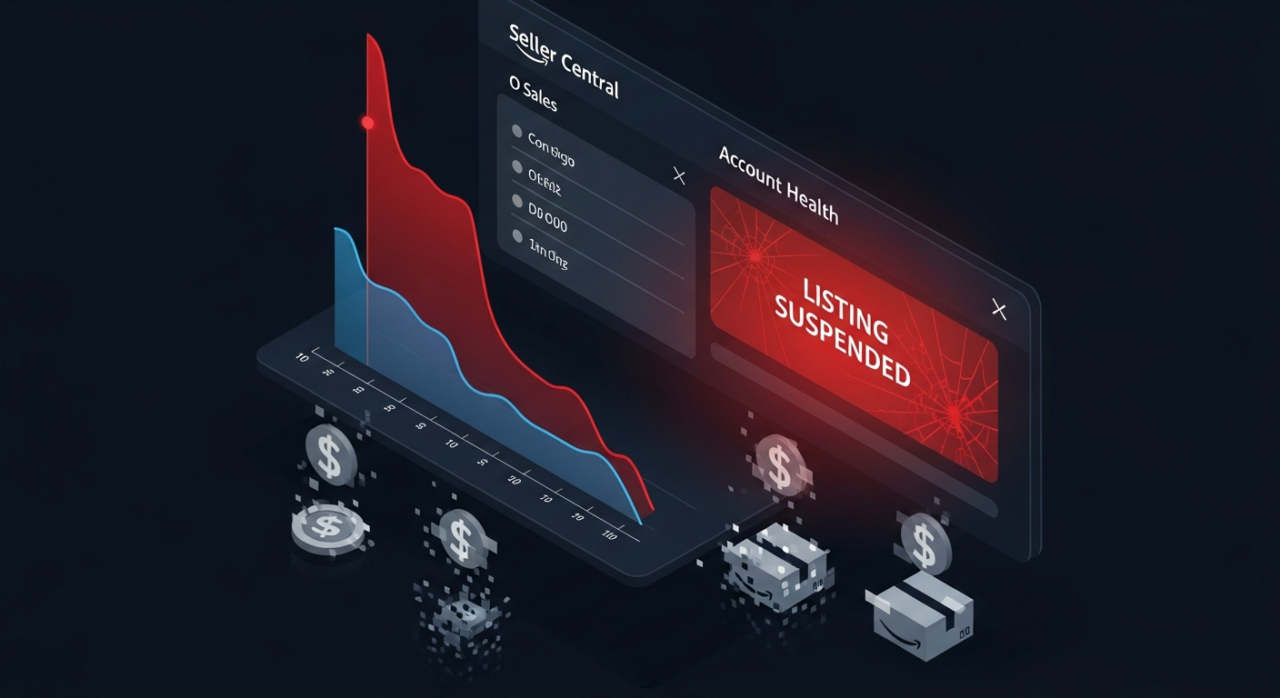
An Amazon listing suspension can feel like a nightmare. Your sales grind to a halt, your ranking plummets, and a sense of panic sets in. In this desperation, you might scour forums and groups for a quick fix. You may even come across a tempting “tactic” that sounds too good to be true: have a friend or family member open a new seller account to relist your product and force its reinstatement.
This advice, often whispered in seller communities as a “gray area” hack, is not a clever workaround. It’s a direct path to disaster. This strategy is a violation of Amazon’s core policies and can lead to the permanent loss of your selling privileges.
Let’s break down why this dangerous myth persists and outline the correct, safe way to get your listing back online.
1. The Flawed Logic of the “New Account” Tactic
The theory behind this risky method is that Amazon gives preferential treatment to new sellers and is more likely to approve a listing from a fresh account. The belief is that once the ASIN is active on the new account, it will magically be reinstated for your original, suspended account. Proponents might even suggest using a virtual private server (VPS) to hide the connection between the accounts.
This entire premise is built on a misunderstanding of how Amazon operates. Amazon’s systems are not easily fooled, and their primary goal is to maintain the integrity of the marketplace, not to give new sellers a free pass.
2. Violating Amazon’s Strict Multiple Account Policy
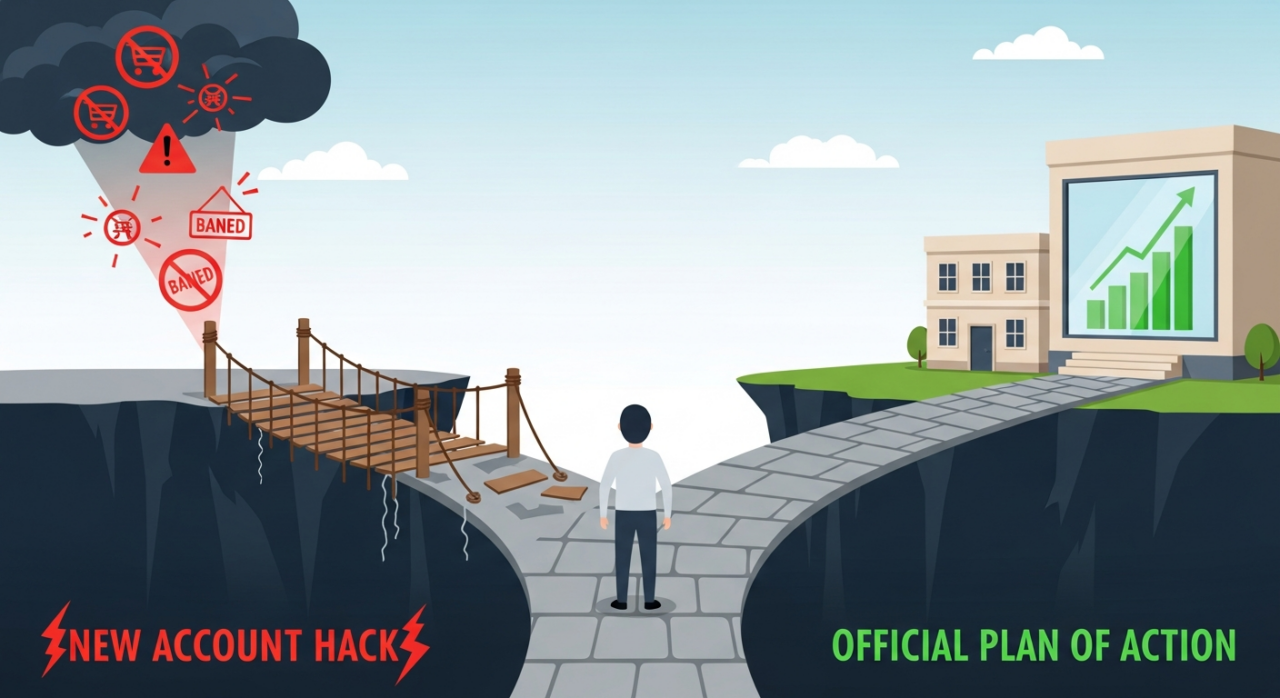
The biggest red flag with this tactic is that it directly violates one of Amazon’s most fundamental rules. Amazon’s policy clearly states that sellers may only maintain one Seller Central account unless they have a legitimate business need for a second one, which often requires prior approval.
Creating a new account specifically to circumvent a performance issue, such as a listing suspension or a full account deactivation, is an explicit and serious violation. It’s not a “gray area”; it’s a black-and-white policy breach that Amazon’s teams are trained to identify.
3. The Inescapable Web of Account Association
You might think using a different name, bank account, and even a VPS will keep you safe. Think again. Amazon employs incredibly sophisticated technology to detect and link related accounts.
Their systems cross-reference dozens of data points to find connections, including:
- IP addresses
- Bank account information
- Credit card details
- Business names and addresses
- Tax ID numbers
- Even device information and browser fingerprints
A VPS only masks your IP address, which is just one piece of the puzzle. If any other data points overlap, Amazon’s algorithm will likely link the accounts, and the consequences are severe.
4. The Real Consequences: Risking Your Entire Business
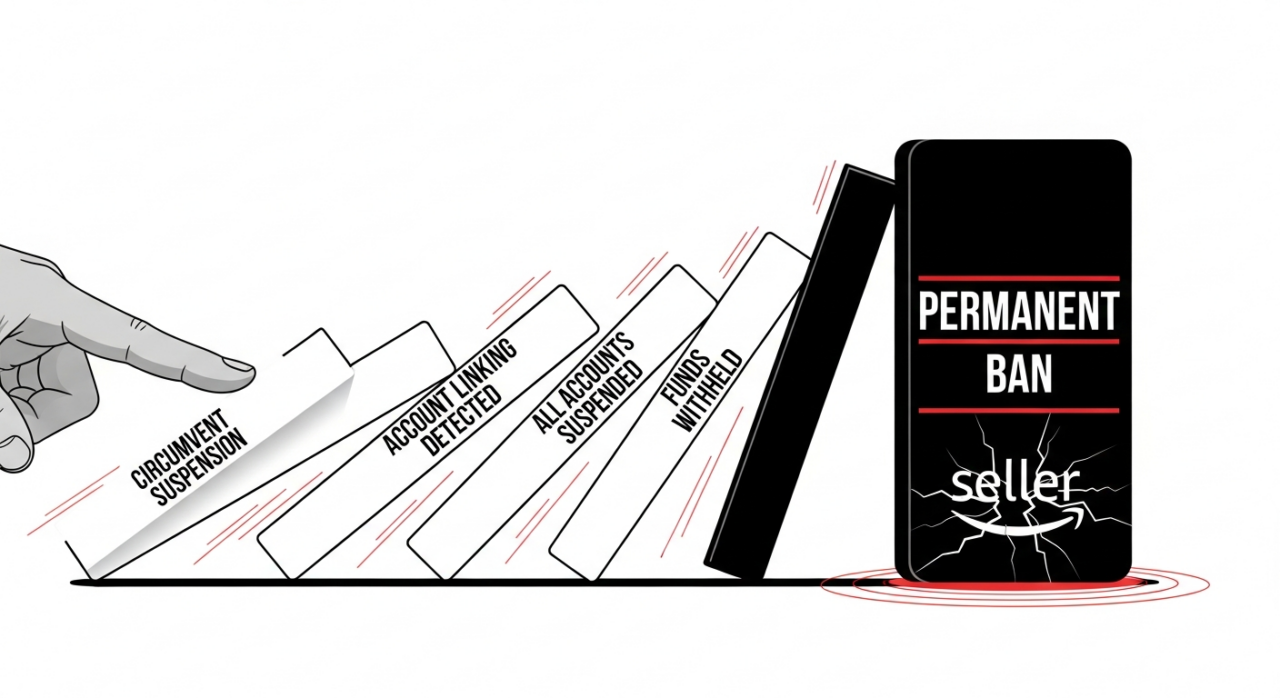
Attempting this tactic is a gamble where you stand to lose everything. If Amazon links your original account to a new one created to bypass a suspension, you won’t just fail to get your listing back. You will face a cascade of penalties.
Suspension of ALL Accounts: Both your original account and the new “helper” account will be suspended or deactivated.
Withholding of Funds: Amazon has the right to freeze and withhold all funds in all associated accounts.
A Permanent Ban: A multiple-account policy violation is one of the fastest ways to get permanently banned from selling on Amazon. This is not a temporary setback; it’s a business-ending outcome.
The risk completely outweighs any potential, short-lived reward. You could turn a single listing issue into a complete deplatforming.
5. The Correct Path: The Plan of Action (POA)
The only legitimate and sustainable way to reinstate a removed listing is by following Amazon’s official process. It requires work, but it protects your business for the long term.
First, identify the core reason for the removal. Check your Performance Notifications and your Account Health dashboard in Seller Central. Amazon will tell you what policy you violated.
Next, you must write a comprehensive Plan of Action (POA). A strong POA doesn’t make excuses. It clearly and concisely addresses three key points:
- Root Cause: What was the fundamental error or process failure that led to the violation?
- Corrective Actions: What immediate steps have you taken to fix the problem with the listing and any affected orders?
- Preventative Measures: What long-term systems, processes, or checks have you implemented to ensure this specific violation never happens again?

Finally, submit your appeal and POA through the official channels within your Seller Central account. This demonstrates that you are a responsible seller who takes Amazon’s policies seriously. While it may not be instantaneous, it is the only method that ensures the long-term health and survival of your Amazon business. Don’t trade your future for a dangerous and ineffective shortcut.
We are here to help you scale.
Note: Include the buttons at the bottom by using “Custom HTML” (Here)
Written By: Liezel Felisilda
📺 YouTube: EHP Consulting Group on YouTube
🎵 TikTok: EHP Consulting Group on TikTok
Email: info@ehpconsultinggroup.com
Website: www.ehpconsultinggroup.com
Number: 925-293-3313
Date Written: June 12, 2026