 (925) 293-3313
The Walmart Marketplace represents a massive opportunity for health and wellness brands, but breaking into the dietary supplements category isn’t as simple as just listing your product. It’s a restricted category that requires pre-approval, strict adherence to federal regulations, and a clear understanding of Walmart’s ever-evolving policies. Recent updates have tightened the gates, prioritizing brand owners and their authorized partners.
If you’re ready to navigate the process, this guide will walk you through the essential steps to get your supplements approved and listed for sale on one of the world’s largest retail platforms.
1. Become a Trusted Walmart Marketplace Seller
Before you can even think about selling supplements, you must first be an approved seller on the Walmart Marketplace. This foundational step establishes your business as a legitimate and reliable entity. Walmart is looking for partners with a proven track record. To get approved, you’ll need to have your essentials in order:
- A U.S. Business Tax ID: An Employer Identification Number (EIN) is required. A Social Security Number (SSN) will not be accepted.
- Verifiable U.S. Business Operations: You must provide a physical U.S. business address or a verifiable place of operations.
- A History of E-commerce Success: Walmart wants to see that you have experience successfully operating an e-commerce business and maintaining excellent customer service standards.
- A Compliant Product Catalog: Your existing products must align with Walmart’s Prohibited Products Policy.
Think of this as your entry ticket. Without meeting these baseline requirements, you won’t be able to proceed to the category-specific approval process.
2. Protect Your Brand with the Walmart Brand Portal
For supplement brands, this step is non-negotiable. The Walmart Brand Portal is a powerful tool that allows you to claim ownership of your brand, protect your intellectual property from unauthorized sellers, and manage your brand’s official presence.
To enroll, the primary requirement is a registered trademark with the United States Patent and Trademark Office (USPTO). Once you have that, you can create a Brand Portal account directly through your Seller Center and submit your trademark information for verification. This move not only satisfies a key requirement for selling in restricted categories but also gives you crucial control over how your products are represented on the platform.
3. Create Your Draft Supplement Listing
This step might feel counterintuitive, but it’s a critical part of the official process. You must create the listing for your dietary supplement in the Seller Center, even though you know it will be unpublished or result in an error because you are not yet approved.
The purpose of this is to generate an Item ID for the product. You will need this specific Item ID to reference in your approval request. Without creating the listing first, you won’t have the necessary information to submit your case to Walmart’s support team. So, go ahead and build the listing, save the Item ID, and don’t worry when it doesn’t go live immediately.
4. Submit Your Official Category Approval Request
With your seller account active, your brand enrolled in the portal, and your draft listing’s Item ID in hand, you are now ready to formally request approval. This is done by opening a support case within the Seller Center.
Follow this exact navigation path: Items and Inventory > Item is unpublished > Seller eligibility for restricted categories.
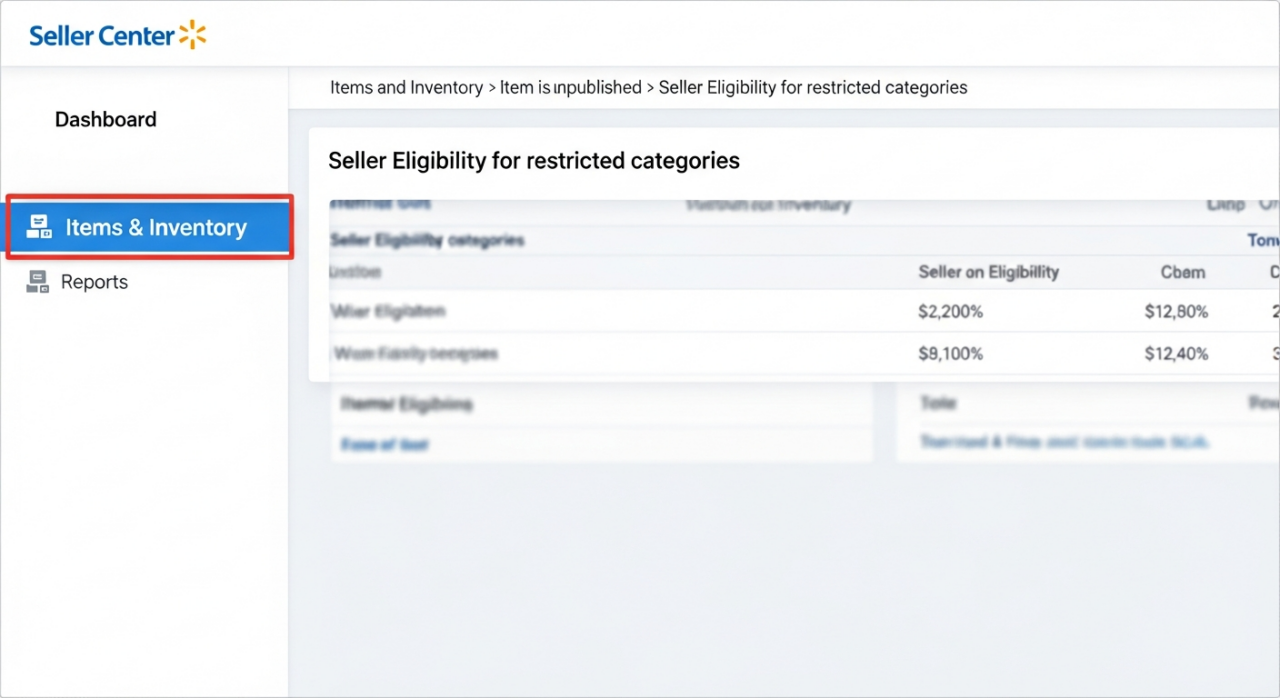
When you create the case, be clear and concise. State that you are the brand owner or an authorized distributor seeking approval to sell in the dietary supplements category. Most importantly, provide the specific Item ID of the draft listing you created in the previous step. This gives the Walmart team a direct reference point to begin their review.
5. Prepare Your Documentation for Enhanced Vetting
Getting approved for the supplements category often involves an “enhanced vetting program.” This is where Walmart scrutinizes your business and products to ensure safety, authenticity, and compliance. Be prepared to provide a comprehensive package of documentation. While the exact requirements may vary, you should have the following documents ready to go:
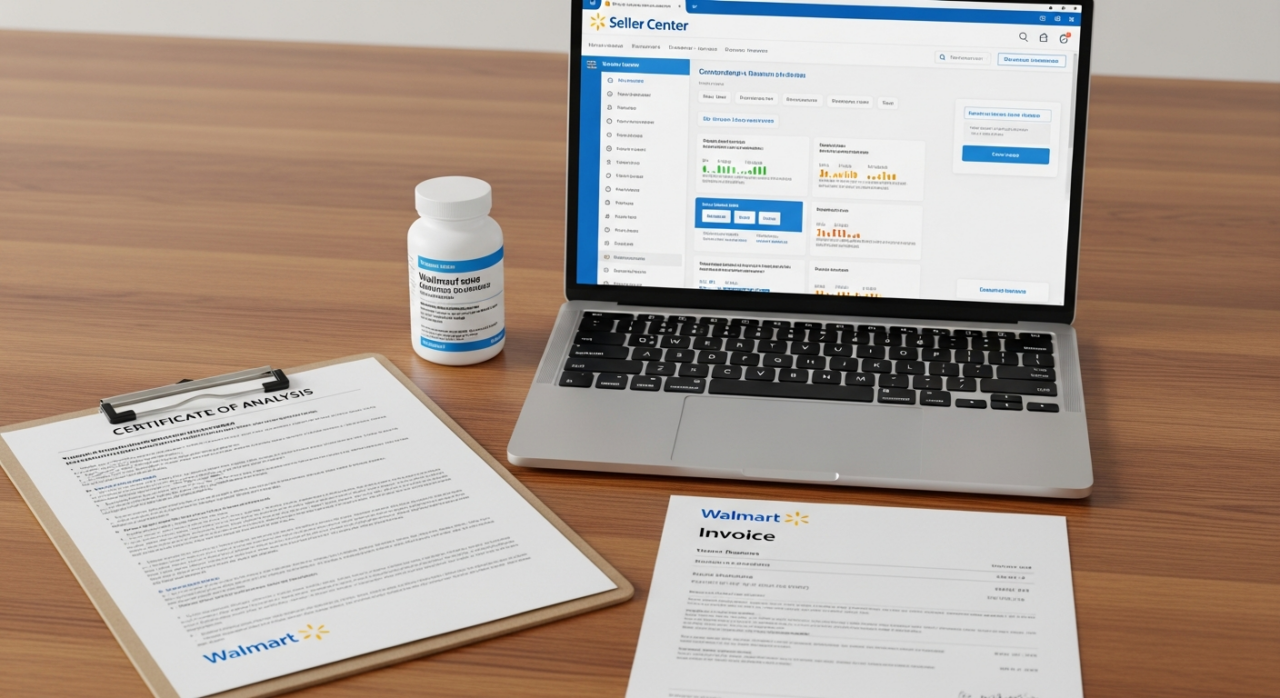
- Proof of Sourcing: Invoices that show a clear chain of custody from your business directly back to the manufacturer.
- Letter of Authorization (LOA): If you are not the brand owner, you will need an official letter from them authorizing you to sell their products on Walmart Marketplace.
- Regulatory Documentation: Any relevant FDA registration or compliance paperwork.
- Third-Party Test Reports: Certificates of Analysis (CoAs) or other third-party lab results that verify the identity, purity, and strength of your product’s ingredients.
- Substantiation for Claims: Documentation to support any structure/function claims you make on your product’s label or listing.
Having these documents organized and ready will significantly speed up the vetting process and demonstrate your commitment to quality and transparency.
Navigating FDA and Walmart Compliance: A Non-Negotiable
All dietary supplements sold on Walmart must strictly comply with all regulations set forth by the Food and Drug Administration (FDA) and the Federal Food, Drug, and Cosmetic Act (FD&C Act). A critical rule to remember is that supplements cannot make disease claims. You cannot state or imply that your product can diagnose, cure, mitigate, treat, or prevent any disease. The FDA considers such statements to be unapproved drug claims, which will lead to immediate rejection and potential delisting.

Review every word on your labels and in your listing descriptions to ensure full compliance.
A Critical Note on Recent Policy Changes
The e-commerce landscape is always changing, and sellers must stay informed. In mid-2025, Walmart significantly restricted access to several major categories, including dietary supplements. The platform’s clear direction is to work primarily with brand owners and sellers who have been explicitly authorized by those brands. This move aims to enhance product safety and customer trust. If you are a reseller without a direct relationship with the brand, gaining approval will be exceptionally difficult, if not impossible. Always monitor official announcements from Walmart to stay ahead of policy updates that could impact your business..“`

Need Help Growing Your Sales?
We are here to help you scale.