 (925) 293-3313
Navigating the world of Amazon FBA can feel like learning a new language, and a huge part of that language is barcodes. Get them wrong, and you risk lost inventory, delayed shipments, and frustrated customers. Get them right, and you’re on the path to smooth, scalable operations. The two most important terms you need to master are UPC and FNSKU. While they might both look like a series of black and white lines, their roles in your business are critically different. Let’s break down what each one does and when you need to use them.
1. The Universal ID: Understanding the UPC
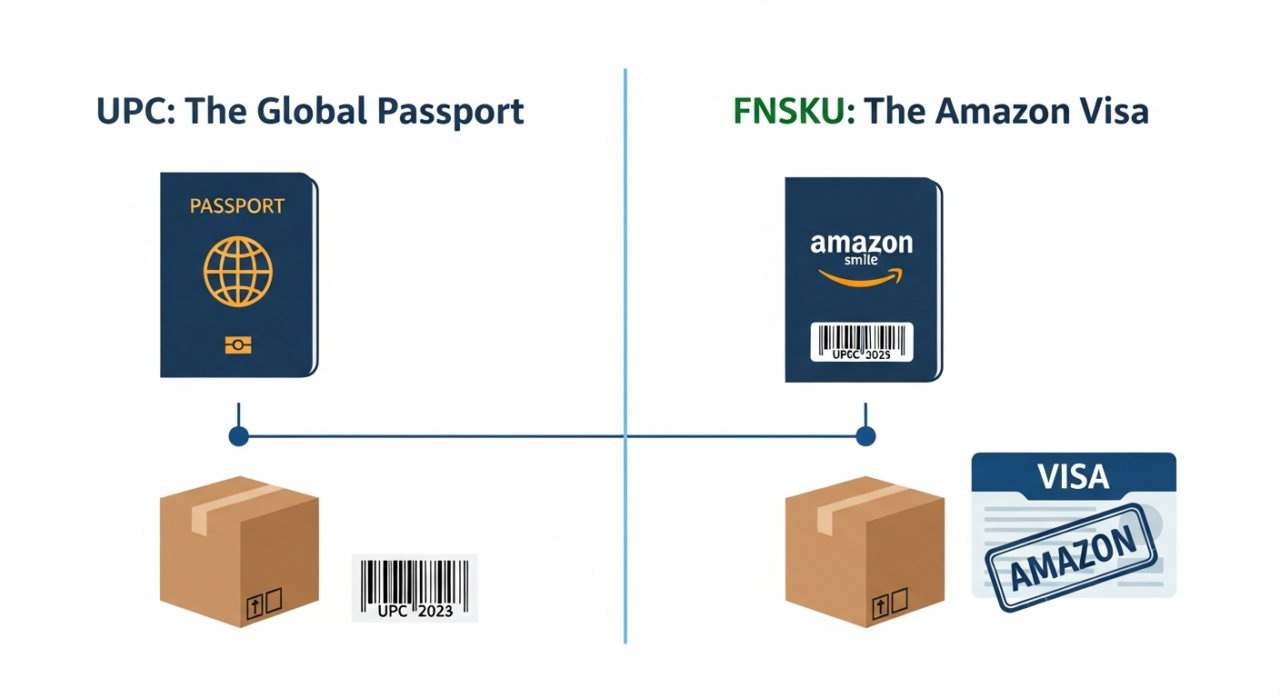
Think of the Universal Product Code (UPC) as your product’s passport. It’s the globally recognized, 12-digit barcode you see on virtually every product in a physical retail store. On Amazon, the UPC is typically required to create a new product listing in the catalog. It serves as the universal identifier that tells Amazon, “This is a specific product, distinct from all others in the world.”
To list a new product, you need a Global Trade Item Number (GTIN), of which the UPC is the most common type in North America. The only legitimate source for these is an organization called GS1. While you might see cheap barcodes for sale elsewhere, using them is a risky bet. Amazon actively verifies UPCs against the GS1 database, and an invalid code can lead to your listing being suppressed or removed. It’s an investment in your brand’s legitimacy. You can license a single UPC directly from GS1 for a one-time fee or purchase company prefixes if you plan to launch multiple products.
2. Amazon’s Internal Tracker: Mastering the FNSKU
If the UPC is your product’s passport, the Fulfillment Network Stock Keeping Unit (FNSKU) is its visa specifically for Amazon’s fulfillment centers. This is an Amazon-exclusive barcode that links a specific product directly to you, the seller. This is absolutely essential for anyone using the Fulfillment by Amazon (FBA) service.
Its primary purpose is to prevent inventory commingling. Imagine you and ten other sellers all sell the exact same garlic press, using the same UPC. Without a unique identifier for each seller’s stock, Amazon’s warehouse would just be one big bin of garlic presses. When a customer buys from your store, they could be sent a unit that another seller provided—one that might be damaged, a poor-quality imitation, or improperly packaged. This could result in bad reviews and returns that damage your account health, even though it wasn’t your physical product.
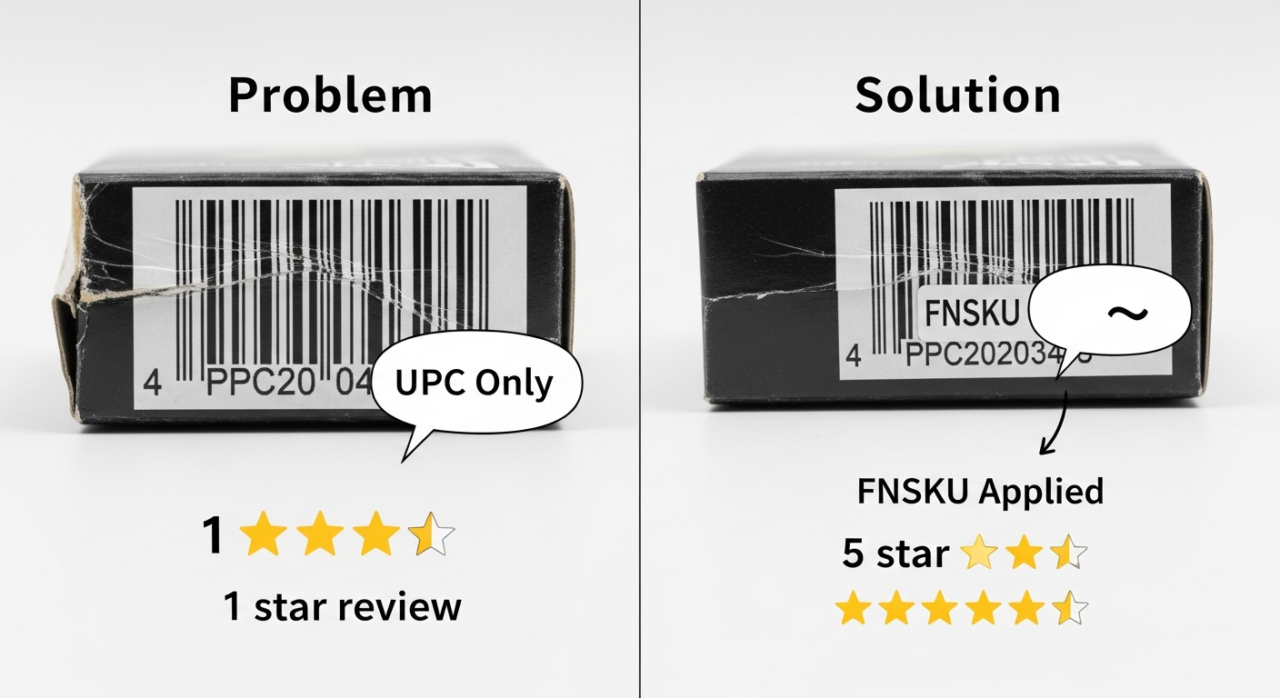
The FNSKU solves this. By requiring you to place an FNSKU label on each item, Amazon can ensure that when a customer buys from you, they receive a unit from the exact batch of inventory you sent in. It protects your brand integrity and the customer experience.
3. Applying Your Barcodes: A Step-by-Step Guide
The workflow between these two barcodes is straightforward once you understand their roles.
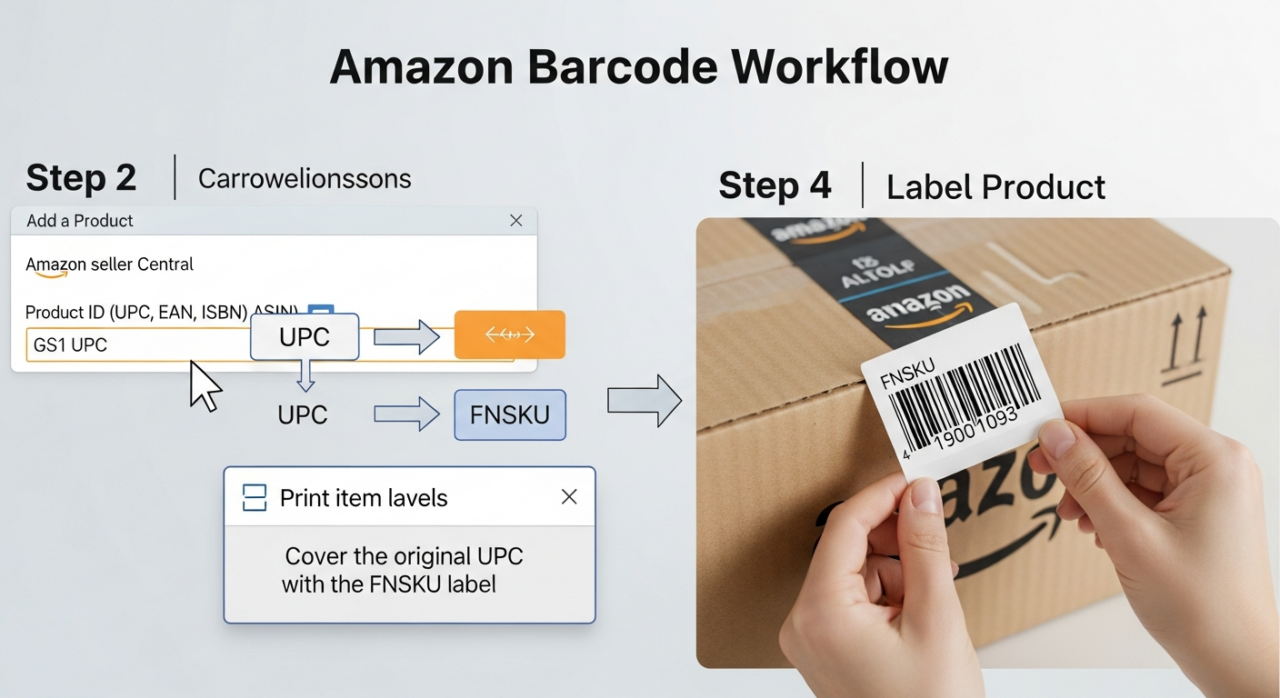
First, you use your GS1-sourced UPC to create your product listing in Amazon Seller Central. Once the listing is live, you’ll convert it to “Fulfilled by Amazon.” At this point, Amazon generates a unique FNSKU for that product.
Before you ship your products to an Amazon fulfillment center, you must physically label each unit. From the “Manage Inventory” tab in Seller Central, you can select your product and choose “Print item labels.” This will generate a PDF of your FNSKU labels. The most critical step is to place this FNSKU label so that it completely covers the original manufacturer’s UPC barcode. The FNSKU is the only barcode Amazon’s scanners should see when they receive your inventory.
4. The Exception: Getting a GTIN Exemption
What if you sell private label products, handmade items, or custom bundles? In these cases, obtaining a UPC for every unique item might not make sense. This is where a GTIN Exemption comes in.

Amazon allows sellers to apply for an exemption, which lets you list products in certain categories without a UPC. To apply, you need to provide the product’s brand and category and supply real-world photos of the product and its packaging from all angles. This serves as proof that the product genuinely does not have a GS1-approved barcode attached.
The smoothest path to a GTIN exemption is through the Amazon Brand Registry. If you have a registered trademark for your brand, enrolling in Brand Registry gives Amazon proof that you own the brand, which greatly simplifies the process of listing your products without needing to purchase a UPC for each one. This gives you more control and is a must-do for any serious private label seller. For sellers looking to optimize every aspect of their business, from listing creation to brand protection and scaling, professional guidance can make all the difference. Explore our comprehensive services to see how we can help, or contact us directly to discuss your brand’s specific challenges and opportunities..
“`
Need Help Growing Your Sales?
We are here to help you scale.
Note: Include the buttons at the bottom by using this “Custom HTML”(Here)
Written By: Liezel Felisilda
📺 YouTube: EHP Consulting Group on YouTube
🎵 TikTok: EHP Consulting Group on TikTok
Email: [email protected]
Website: www.ehpconsultinggroup.com
Number: 925-293-3313
Date Written: January 30, 2026