 (925) 293-3313
When you send your products to a fulfillment center, you trust that the right item will get to your customer in perfect condition. But what if the product your customer receives isn’t the one you sent? This is the core issue behind inventory commingling, a practice with major implications for your brand’s reputation and bottom line.
For years, a key operational difference between Amazon FBA and Walmart WFS has been their approach to commingling. Understanding this difference is crucial, especially with significant changes on the horizon.
1. What is Commingling? Amazon’s High-Speed, High-Risk Model
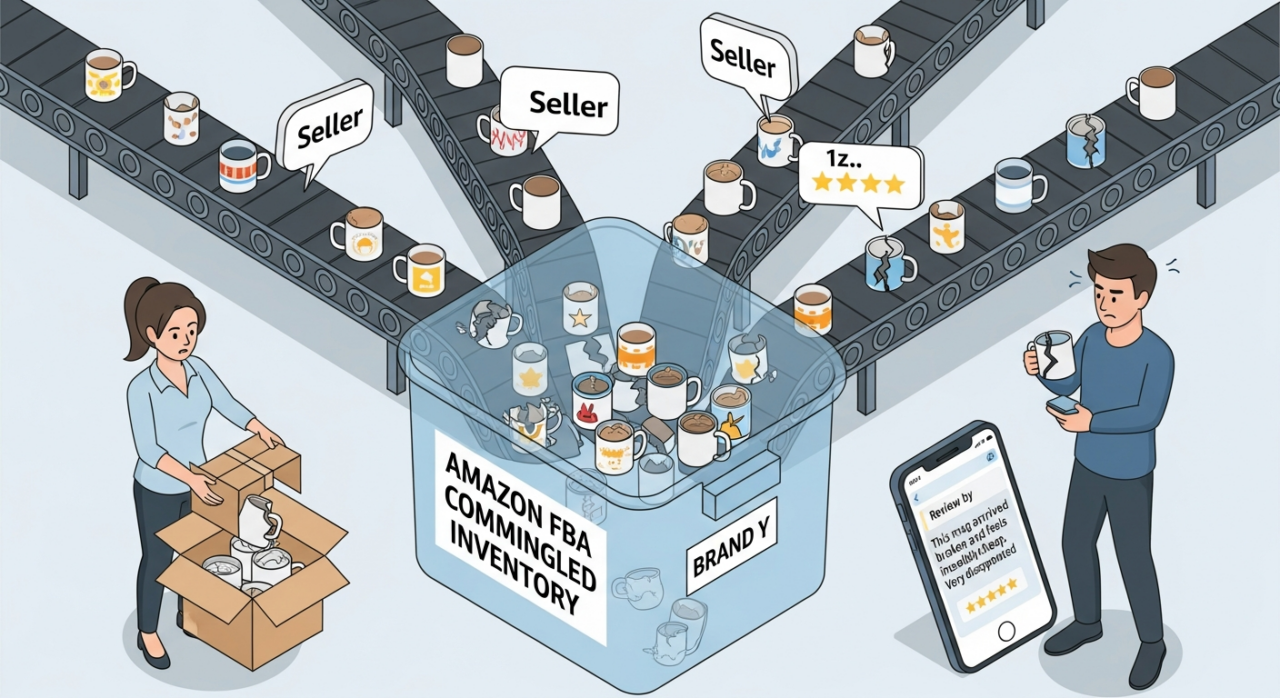
Amazon’s traditional commingling practice involves pooling identical products from different third-party sellers into a single, shared inventory. If you and another seller both sell the same brand of coffee mug, your inventory gets mixed together in the warehouse. When a customer buys from your store, Amazon simply grabs the nearest mug—regardless of whether you or the other seller originally supplied it—and ships it out.
The goal was noble: increase shipping speed and warehouse efficiency. However, this system introduces a huge risk. If another seller’s stock is counterfeit, damaged, or expired, it gets mixed in with your authentic, high-quality products. Your customer could receive that inferior item, leading to negative reviews, returns, and damage to your brand reputation—all for a mistake that wasn’t your fault.
2. The Seller’s Shield: How to Opt-Out with FNSKUs
To protect themselves from the risks of commingling, savvy Amazon sellers have long used the Fulfillment Network Stock Keeping Unit (FNSKU). This is an Amazon-specific barcode that you print and apply over the product’s original manufacturer barcode (like a UPC).

This FNSKU acts as your product’s unique fingerprint within the Amazon ecosystem, linking that specific unit directly to your seller account. By using it, you ensure your inventory is kept separate and that when a customer buys from you, they receive an item you actually sourced and sent to the fulfillment center.
3. The Walmart WFS Approach: Simplicity and Security
In stark contrast, Walmart Fulfillment Services (WFS) has always operated on a simpler, more secure model: they do not commingle inventory.
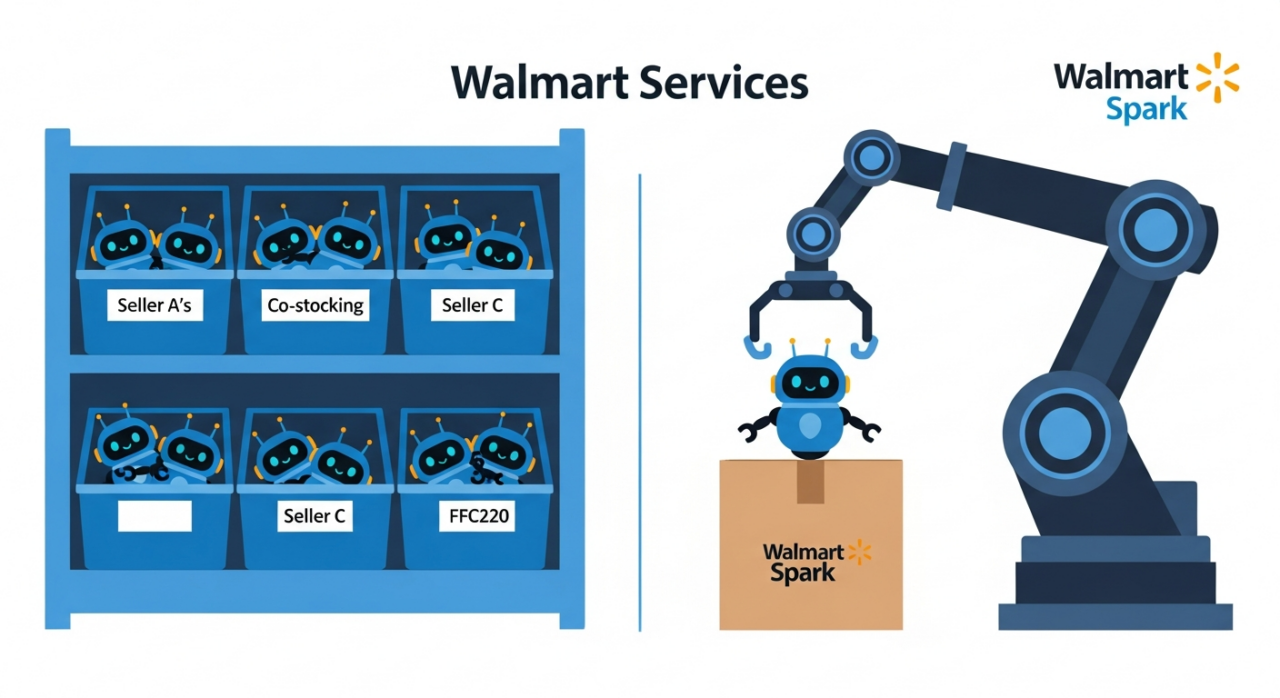
Every item you send to a WFS facility is tracked and stored as your own. When a customer orders from your Walmart storefront, they are guaranteed to receive a product from your specific stock. This straightforward approach eliminates the risk of your products being mixed with counterfeits from less scrupulous sellers, providing a powerful layer of brand protection and quality control right out of the box.
4. The Game-Changer: Amazon is Ending Commingling in 2026
The landscape is about to change dramatically. Amazon has officially announced it will end its inventory commingling practice for third-party sellers, with the policy taking full effect on March 31, 2026. This is a massive win for sellers concerned about brand integrity.
However, this shift comes with new barcoding rules you need to prepare for:
- For Brand Owners: If you are enrolled in Amazon’s Brand Registry, you will be able to use the original manufacturer barcode (UPC, EAN, etc.) on your products. Amazon’s system will now be able to track these barcodes back to you, preventing your inventory from being mixed with others.
- For Resellers: If you are not the brand owner, you will be required to use the Amazon FNSKU barcode on all your products. This will become the standard, mandatory method for keeping your inventory separate and identifiable.
This upcoming policy change aligns Amazon more closely with Walmart’s seller-centric model, prioritizing brand protection and inventory accuracy over the old commingling system. For sellers, this means a safer fulfillment environment on Amazon is coming, but it also means now is the time to perfect your labeling and inventory management processes to ensure you are compliant when the deadline arrives.


Need Help Growing Your Sales?
We are here to help you scale.
YouTube Channel Link: EHP Consulting Group on YouTube
TikTok Profile Link: EHP Consulting Group on TikTok
Written By: Ahzel P. Miral
Email: info@ehpconsultinggroup.com
Website: http://www.ehpconsultinggroup.com
Number: 925-293-3313
Date Written: May 21, 2026