 (925) 293-3313
Navigating the Complexities of Amazon Brand Registry
Navigating the complexities of Amazon Brand Registry has become a top priority for the over 700,000 brands currently enrolled in the program. Since its significant relaunch in May 2017, Brand Registry has evolved from a simple directory into a sophisticated gatekeeping system. However, as enforcement grows stricter, many sellers are turning to “grey-hat” strategies like the Brand Registry Shield Method to protect their assets. To ensure your current assets are protected and compliant, obtaining a free listing audit is an essential first step for any brand owner looking to maintain long-term account health.
The Evolution of Brand Registry Enrollment
The current landscape of Amazon Brand Registry is vastly different from what it was at its inception. While there are over 8 million registered sellers globally, only a fraction—roughly 2 million—are active, and an even smaller percentage have successfully navigated the Brand Registry process. The platform has moved away from the “wild west” era of 2017, implementing more rigorous checks. For instance, the transition to Brand Registry 2.0 mandated registered trademarks, effectively raising the barrier to entry and giving Amazon more data points to track.
Deconstructing Identity Verification Myths
A common misconception in the seller community is that Brand Registry accounts are less scrutinized than Seller Central accounts. Some strategies suggest that identity verification is lax, allowing anyone to open an account without rigorous checks. In reality, Amazon’s Global Brand Relations team has significantly updated its protocols. Today, new applicants frequently face “Brand Registry Enrollment Meetings” via video call, a process further explained in this detailed video guide.

Furthermore, creating a Brand Registry account requires credentials that are increasingly tied to government-issued identification and verified business data. The idea that these accounts exist in an anonymous vacuum is a dangerous assumption for modern sellers.
The Reality of Internal Account Linking
The core of the “Shield Method” relies on the belief that Amazon does not track IP addresses or device metadata for Brand Registry in the same way they do for Seller Central. However, internal data suggests that Amazon uses the same “Internal Linking” technology across all its platforms. This means that IP addresses, browser cookies, device IDs, and “Related Account” metadata are constantly monitored. Attempting to isolate a brand by using a separate email address—even a Gmail account over an encrypted service like ProtonMail—does little to mask a user’s footprint if the underlying hardware and network remain the same. These complexities are often discussed in community discussions regarding account association.

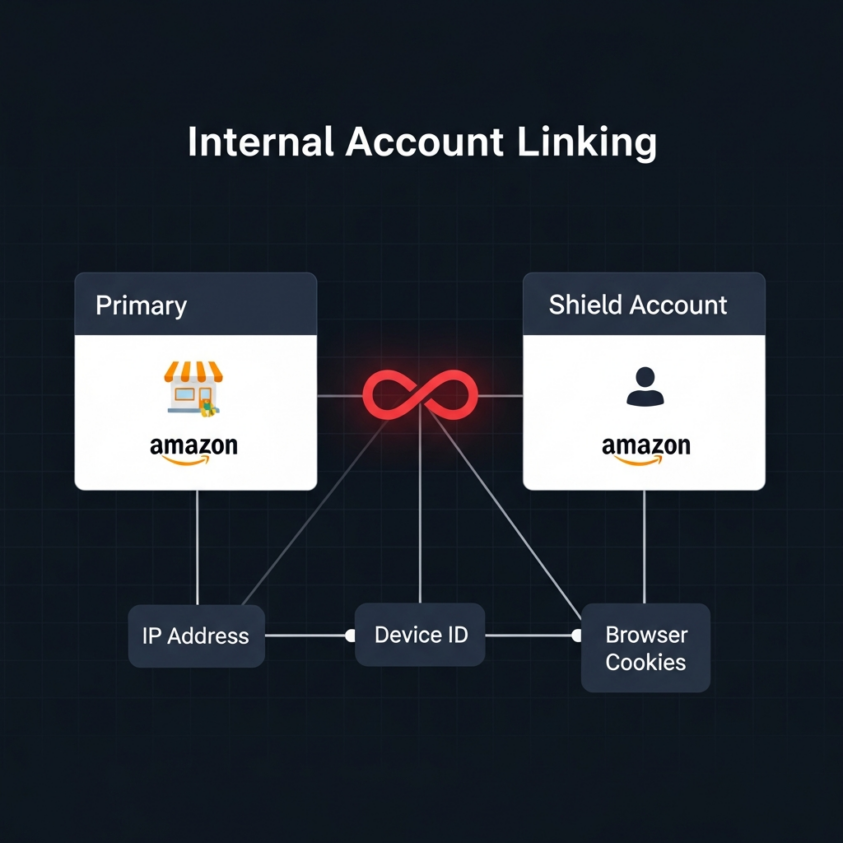
The Risks of the Brand Registry Shield Method
The “Shield Method” proposes a three-layer isolation strategy: building a registry on a separate email to “decouple” it from the Seller Central account. The theory is that if the selling account is suspended, the brand remains “shielded.” However, Amazon’s Terms of Use explicitly state that if any account associated with a brand violates policy, the brand’s privileges can be revoked entirely. Sellers often find themselves in difficult situations when these links are discovered, as seen in specific enforcement cases.
By positioning a Seller Central account as a mere “reseller” of your own brand, you may inadvertently trigger “Brand Registry Abuse” flags. If a reseller account is banned for IP issues, the “Brand Owner” account is often held liable for failing to police their authorized distribution.
Why Trademark Data is the Ultimate Link
Perhaps the most significant flaw in modern isolation strategies is the reliance on the trademark itself. Amazon’s backend logic links accounts primarily through the USPTO or EUIPO Trademark Serial Number. Because every “backup” or “shield” account must reference the same filing to claim brand ownership, Amazon’s algorithms instantly connect these accounts into a single “Related Account” cluster.
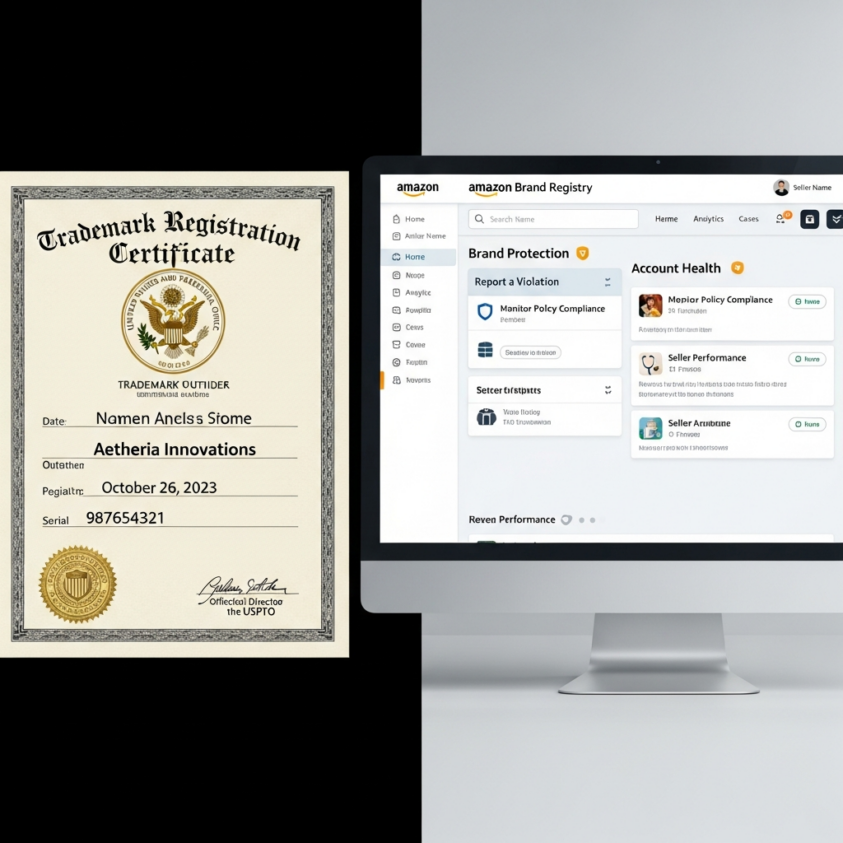
If Account A is blacklisted for abuse, the trademark associated with it is often “tainted,” rendering any backup accounts (B or C) useless for filing IP complaints or managing the brand.
Navigating the 2024 Enforcement Environment

In the current environment, the “grey-hat” tactics that may have worked between 2018 and 2020 are increasingly high-risk. Amazon’s “Brand Protection” and “Account Integrity” algorithms are now highly integrated. Rather than focusing on complex account “stacking” or isolation, the most sustainable strategy involves maintaining a clean link between your trademark, your identity, and your selling account. Transparency with Amazon’s Brand Registry team is generally more effective than attempting to circumvent automated linking systems that are designed to see through email and IP masking.
To navigate these regulations safely, it is highly recommended to leverage professional Amazon management services to ensure compliance. If you have concerns about your current brand setup or need assistance with registry issues, feel free to contact us for expert guidance.
YouTube Channel Link: EHP Consulting Group on YouTube
TikTok Profile Link: EHP Consulting Group on TikTok
Written By: Jhan Rose Magbanua
Email: info@ehpconsultinggroup.com
Website: http://www.ehpconsultinggroup.com
Number: 925-293-3313
Date Written: July 26, 2026