 (925) 293-3313
Navigating the world of Amazon selling can feel like a high-wire act, and nothing sends a jolt of fear through a seller quite like an intellectual property (IP) complaint or a sudden drop in their Account Health Rating (AHR). This number isn’t just a score; it’s the pulse of your business on the platform. Understanding how it works, what makes it fluctuate, and how to respond to violations is not just good practice—it’s essential for survival. Let’s demystify the system and outline a clear strategy for protecting your account.
At the core of your seller dashboard is the Account Health Rating, a metric that scores your performance from 0 to 1,000. Every new seller starts at a respectable 200. This score is a living number, updated daily based on your activity over the last 180 days. You gain points by successfully fulfilling orders, which helps Amazon contextualize your performance against your sales volume. You lose points when Amazon flags a policy violation.
The AHR is color-coded for at-a-glance understanding:
- Green (Healthy): A score between 200 and 1,000 means your account is in good standing.
- Yellow (At Risk): A score between 100 and 199 is a warning sign. Your account is at risk of deactivation, and you need to take immediate action.
- Red (Unhealthy): A score of 99 or lower means your account is either eligible for deactivation or has already been suspended.

1. Understand Violation Severity
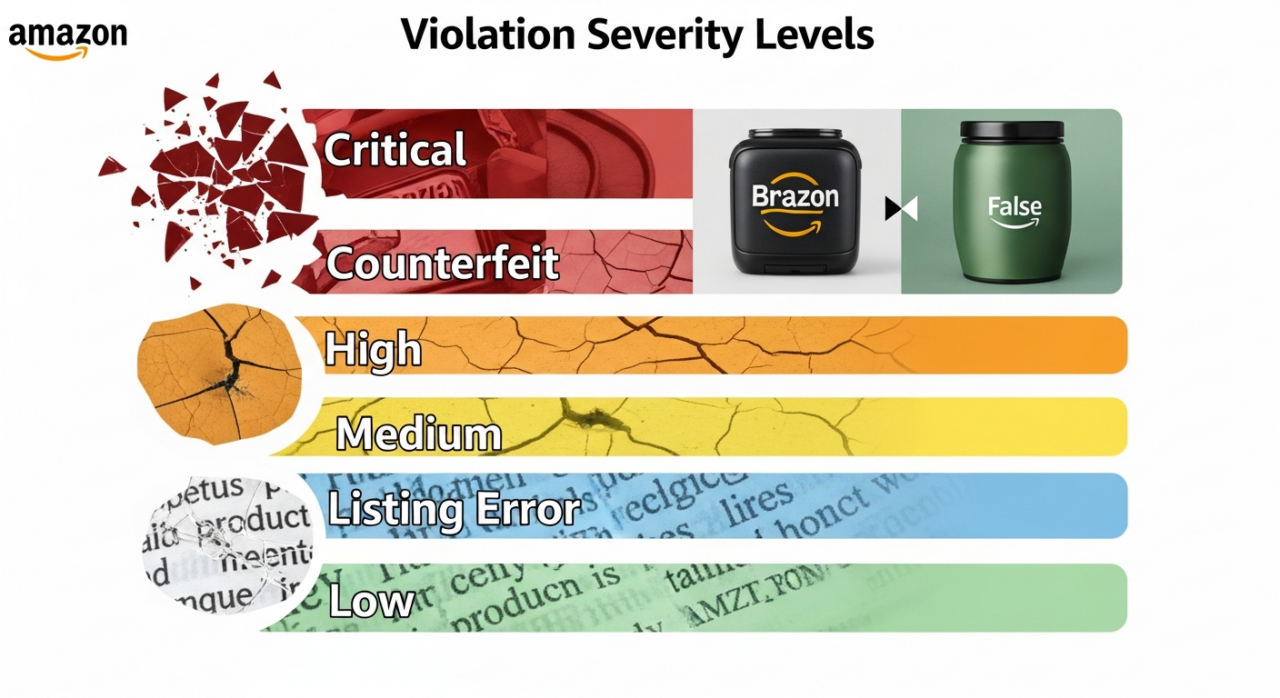
Not all violations are created equal. Amazon categorizes them by severity, which directly impacts how many points you lose. A minor listing error won’t hurt nearly as much as a serious infringement.
- Critical: These are the most severe offenses, like selling counterfeit goods or engaging in fraudulent activity. A single critical violation can instantly drop your AHR score to zero and lead to immediate deactivation.
- High: Violations like trademark infringement fall into this category. They carry a significant point deduction and can quickly put your account in the “At Risk” zone.
- Medium: These issues, such as a suspected counterfeit violation, can erode trust over time. While not immediately catastrophic, they need to be addressed promptly.
- Low: These are minor issues, perhaps with a product title or image. Amazon is more tolerant of infrequent low-severity violations.
2. Decode IP and Counterfeit Complaints
Intellectual property complaints are a major source of stress for sellers. They generally come in two forms. The first is a direct IP complaint filed by a brand or rights holder for trademark or copyright infringement. The second is a “Suspected IP Violation,” which is often flagged by Amazon’s internal automated systems.
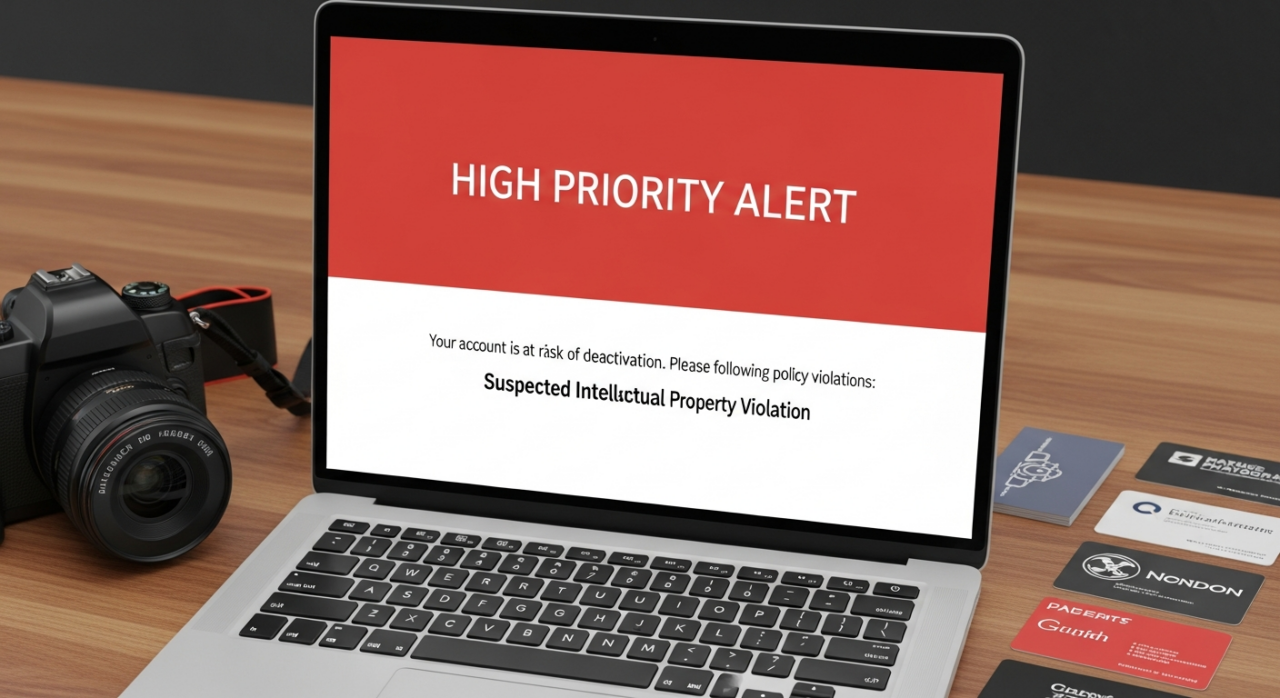
However, the most dangerous violation is counterfeiting. Selling fake goods is strictly prohibited and is treated as a high or critical severity violation. Due to legal pressures and their commitment to customer trust, Amazon has zero tolerance for counterfeit products, making this a top enforcement priority.
3. Beware of Repeat Violations
One of the most overlooked dangers to account health is the repeat violation. If you violate the same policy multiple times within a 180-day period, the point deduction increases with each new offense. This escalating penalty means repeat issues will damage your AHR score much faster than unrelated, one-off mistakes.
Crucially, your account can be deactivated for reaching the maximum number of repeat violations for a single policy, regardless of your overall AHR score. For serious policies, this threshold can be as low as two violations. Hitting this limit can cause your score to plummet to zero, triggering an immediate suspension.
4. Develop a Proactive Response Plan
When a violation notice appears, panic is a common reaction, but a clear-headed strategy is your best defense. Being proactive and responsive is key to resolving issues before they escalate into a suspension.

In many cases, Amazon will provide a 72-hour warning before deactivating an account, especially for sellers in the Account Health Assurance program. This is your critical window to act. Do not ignore it.
5. Craft a Winning Plan of Action (POA)
If your account is at risk or has been suspended, you will likely need to submit a Plan of Action (POA). This is your formal appeal and your chance to show Amazon you have solved the problem. A successful POA must be detailed and convincing, covering three key areas:
- Root Cause: Clearly identify what went wrong. Don’t make excuses. Dig deep into your processes to explain why the violation occurred.
- Immediate Corrective Actions: Detail the specific steps you have already taken to fix the problem for the affected orders or listings.
- Long-Term Preventative Measures: This is the most important part. Outline the new systems, processes, or checks you will implement to ensure this specific issue never happens again. Learning to build these Long-Term Preventative Measures is crucial.

6. Know How to Communicate with Amazon
When you need help, you can contact support through the “Help” button in Seller Central. Professional sellers have access to email, phone, and chat support, while Individual sellers are typically limited to email.
However, if your account is already suspended, your primary line of communication shifts to the formal appeal process. Direct phone or chat support may no longer be an option, making your submitted POA the single most important piece of communication you have. Address any violation notifications promptly and submit your POA before a suspension whenever possible to show you are working in good faith to resolve the issue.
Need Help Growing Your Sales?
We are here to help you scale.
Written By: Liezel Felisilda
📺 YouTube: EHP Consulting Group on YouTube
🎵 TikTok: EHP Consulting Group on TikTok
Email: [email protected]
Website: www.ehpconsultinggroup.com
Number: 925-293-3313
Date Written: September 4, 2026