 (925) 293-3313
When you’re deciding where to sell your products online, the debate often boils down to two giants: Amazon and eBay. The common assumption is that Amazon, with its colossal customer base and powerful fulfillment network, is the undisputed champion for sellers. But when you look past the sheer volume and dig into the numbers, as discussed in many seller communities, a different story emerges. Which platform actually leaves more money in your pocket at the end of the day?
The answer might surprise you. While Amazon offers unparalleled reach, its complex and multi-layered fee structure can significantly erode your profit margins. A careful comparison reveals that for many sellers, eBay’s more straightforward fee model often results in higher profitability per item sold. Let’s break down why the tortoise of eBay can beat the hare of Amazon in the race for profits.
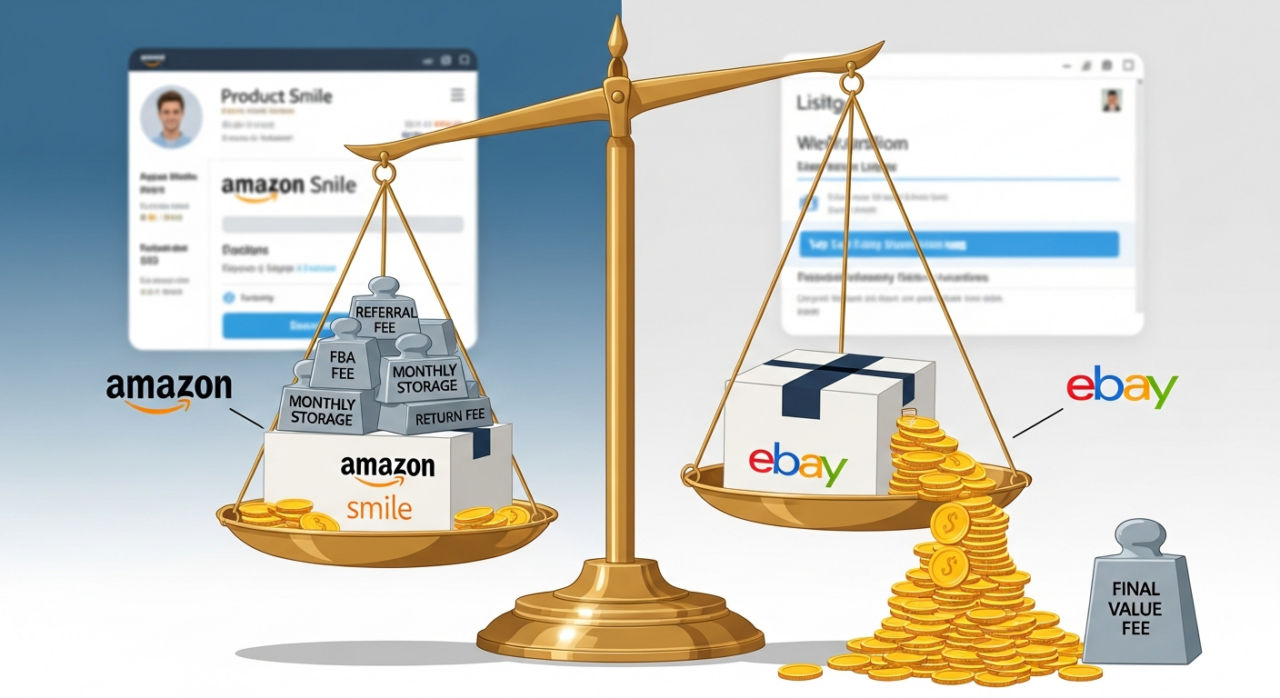
Deconstructing Amazon’s Complex Fee Web
Selling on Amazon, especially using Fulfillment by Amazon (FBA), is convenient, but that convenience comes at a steep price. The fees go far beyond a simple commission on the sale.

First, you have the Referral Fee, which is a percentage of the total sales price (typically 8-15%) that Amazon takes for connecting you with a customer. On top of that, if you’re a Professional seller, you’re paying a $39.99 monthly subscription fee right off the bat.
But the real profit-eaters are the FBA fees. These include costs for picking, packing, and shipping your product. The true sleeper costs, however, are the ones that happen *after* the initial transaction. Amazon charges Monthly Storage Fees for every cubic foot your inventory occupies in their warehouse. These rates spike during the busy Q4 holiday season. If your products don’t sell quickly, you’ll be hit with Long-Term Storage Fees, which can be crippling for slow-moving inventory.
Furthermore, Amazon’s customer-centric return policy means you’ll also face Return Processing Fees for items in categories with free returns. These back-end costs—storage, returns, and even fees to have your own inventory disposed of or sent back to you—are not always obvious and can turn a profitable product into a losing venture. It’s why many successful sellers rely on specialized software suites like Helium 10 or Jungle Scout just to track their profitability.
Unpacking eBay’s More Straightforward Model
eBay’s fee structure is refreshingly direct in comparison. The primary cost you’ll encounter is the Final Value Fee. This is a single percentage charged on the total sale amount, including the item price and shipping. Critically, this fee already incorporates payment processing, so you aren’t hit with a separate charge from a third-party processor. For most categories, this fee hovers around 13.25% plus a fixed $0.30 per order.
Beyond that, the costs are more predictable and often optional. Sellers get a generous allotment of free listings each month (usually up to 250), after which a small, non-refundable Insertion Fee applies. You can choose to pay for Optional Listing Upgrades like a bold title to make your product stand out, but you have complete control over these expenses. There are no mandatory storage fees, no long-term penalties for slow-moving inventory, and no complex return processing fees charged back to you in the same way as Amazon FBA.
The Head-to-Head Profitability Showdown
When you place the two models side-by-side for the same product, eBay frequently comes out ahead on net profit. The key difference lies in Amazon’s compounding “back-end” fees. A product sitting in an Amazon warehouse for months accrues storage costs that simply don’t exist on the eBay platform, where you manage your own inventory.
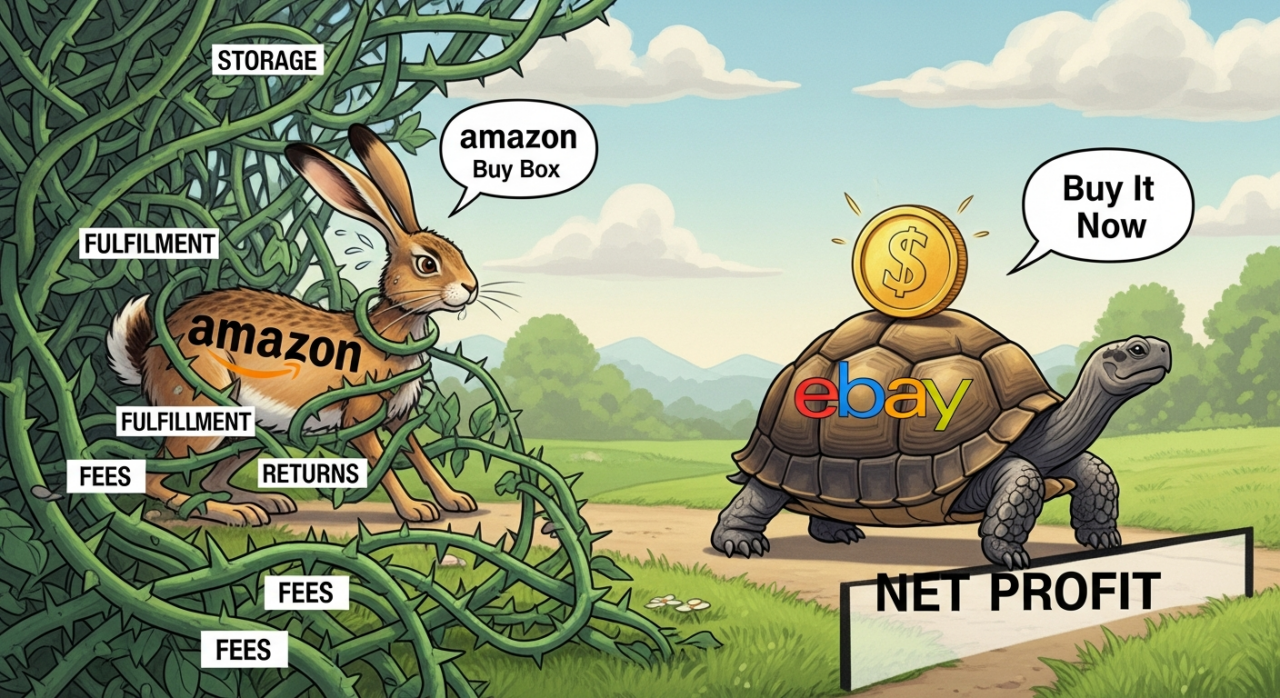
Consider a single sale. The referral or final value fee might look similar at first glance. But with Amazon, you must subtract FBA fulfillment fees, a portion of your monthly storage costs, and potential return fees. With eBay, once the final value fee is paid, the remaining profit is much clearer.

This may seem like a small difference on a single item, but the impact is massive when scaled. For a high-volume seller, a difference of even a dollar or two in profit per unit can add up to tens of thousands of dollars in lost revenue over the course of a year. Amazon’s system can penalize you for having a diverse or slow-selling inventory, whereas eBay’s model gives you the flexibility to list items without the pressure of mounting storage costs.
Choosing the Right Platform for Your Products
Ultimately, the most profitable platform depends heavily on what you sell and your business model. Neither platform is a one-size-fits-all solution, and the eBay vs. Etsy vs. Amazon debate has unique considerations for every type of product.
Choose Amazon when: You are selling new, popular, or high-demand branded products that are guaranteed to move quickly. The convenience of FBA and access to Amazon’s massive Prime customer base can justify the higher fees if your inventory turnover is high.
Choose eBay when: You are selling unique, vintage, used, or one-of-a-kind items. It’s also the superior platform for sellers who want maximum control over their branding, listings, and fulfillment process. If you want to avoid unpredictable storage fees and maintain higher profit margins, especially on items that may not sell overnight, eBay provides a more stable and predictable cost environment.
Before you commit your business to one platform, ignore the hype and do the math. The assumption that bigger is always better can be a costly mistake. By understanding the full, detailed fee structures of both Amazon and eBay, you can make an informed decision that protects your profit margins and sets your business up for true financial success. If you need expert guidance to navigate these choices, feel free to get in touch.

Need Help Growing Your Sales?
We are here to help you scale.
YouTube Channel Link: EHP Consulting Group on YouTube
TikTok Profile Link: EHP Consulting Group on TikTok
Written By: Ahzel P. Miral
Email: [email protected]
Website: http://www.ehpconsultinggroup.com
Number: 925-293-3313
Date Written: February 17, 2026