
 (925) 293-3313
The landscape of Amazon FBA changed significantly with the introduction of the Inbound Placement Service Fee. For years, sellers enjoyed relatively straightforward shipping workflows, but Amazon’s shift toward a decentralized fulfillment network means logistics costs are now being passed down to those who prefer simplicity over optimization. To maintain your margins, you need to understand how to navigate these new requirements and use Amazon’s updated Send to Amazon workflow to your advantage.
Master the Three Inventory Split Options
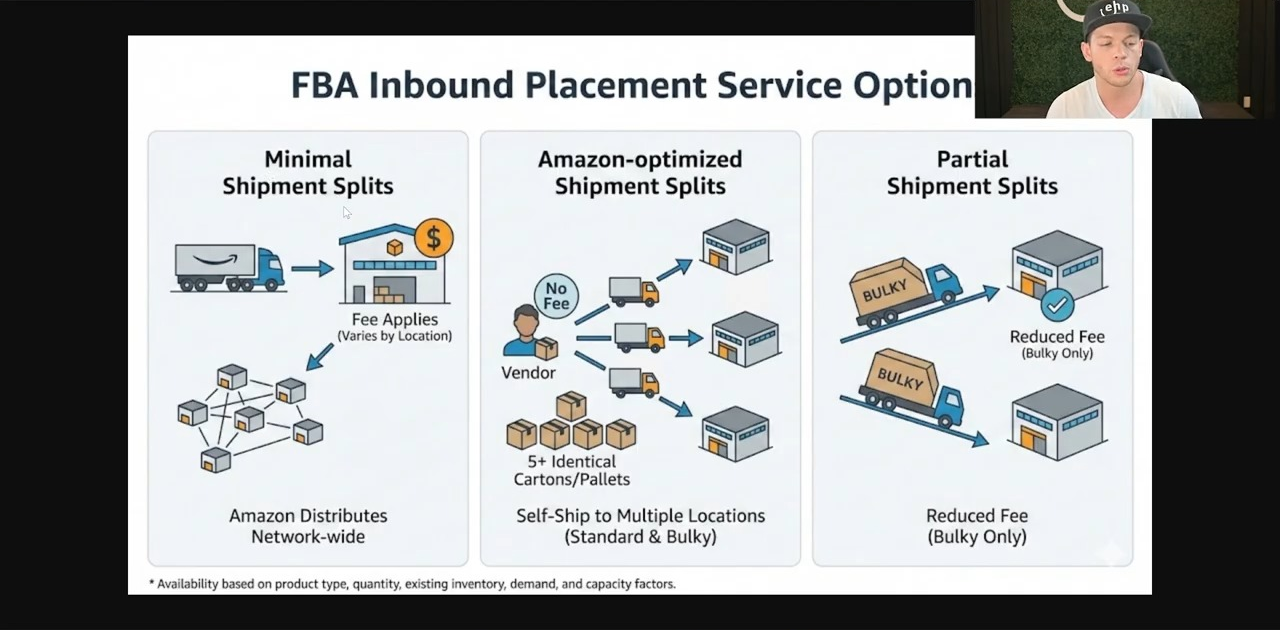
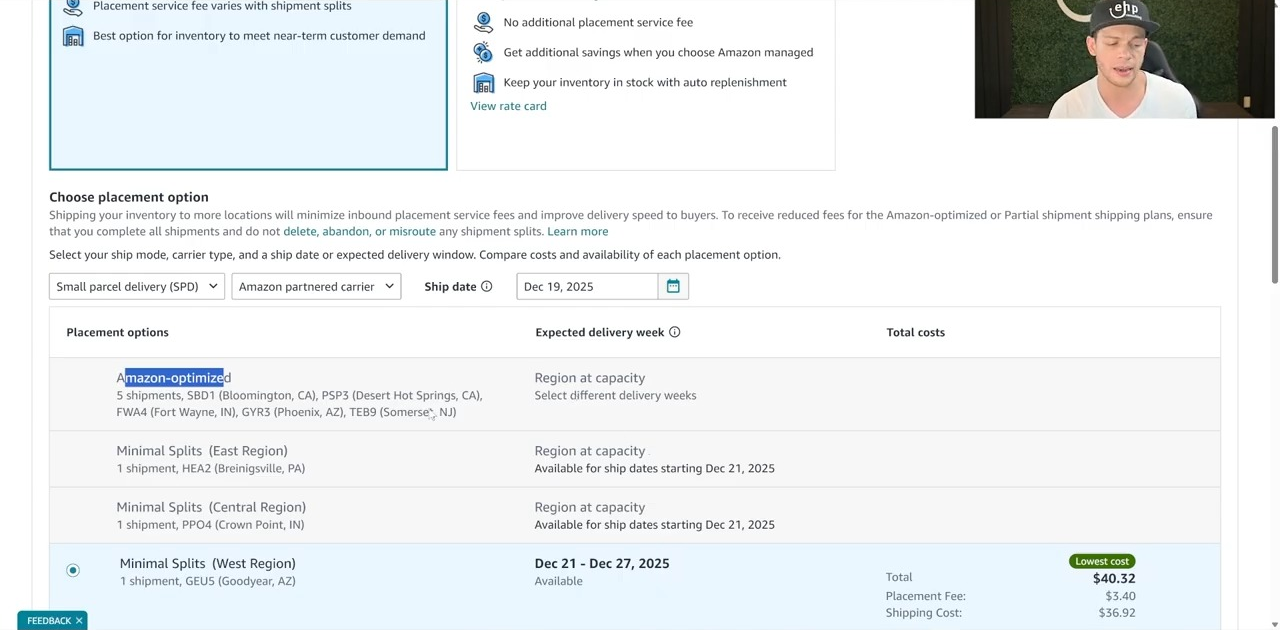
Amazon now categorizes every shipment into three distinct paths, each with a different fee structure. Understanding these is the first step in protecting your bottom line. You can find detailed technical breakdowns in the Amazon Seller Central help documentation.
- Minimal Shipment Split: This option allows you to send your inventory to a single receiving center. While this is the most convenient for your warehouse team, it carries the highest cost, often ranging from $0.21 to $0.68 per unit depending on size and weight.
- Partial Shipment Split: By sending your inventory to two or three locations, you can reduce the placement fee. This is a middle-ground solution for sellers who want to save money but aren’t ready for a full logistics overhaul.
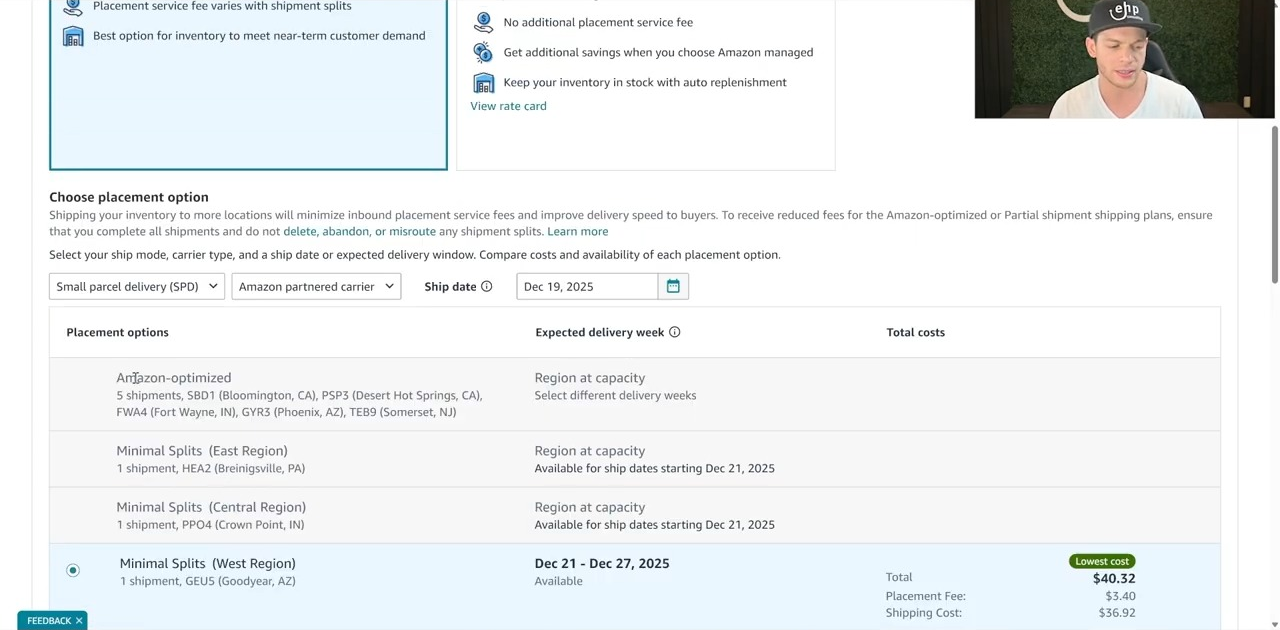
- Amazon Optimized Shipment Split: This is the “gold standard” for cost-conscious sellers. By sending your inventory to several locations, as the Amazon-optimized plan in the example does (five shipments), you can reduce your placement fee. Amazon rewards you for doing the heavy lifting of distributing inventory across their network.
Apply the Five-Carton or Pallet Rule for Optimized Splits
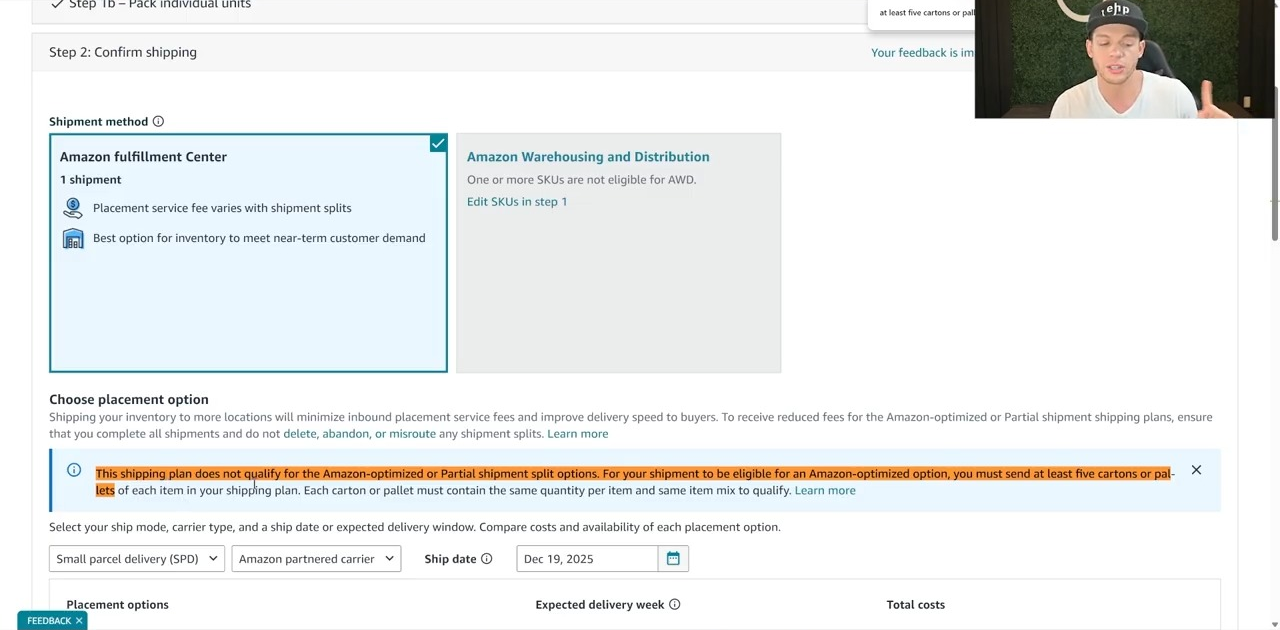
One of the most critical updates to the “Send to Amazon” workflow is the eligibility criteria for the “Optimized” split. To qualify for the Amazon-optimized or Partial placement options, your shipment must meet the carton or pallet rule below. If you are new to this process, reviewing a guide on how to send products to Amazon FBA can help you visualize the physical preparation needed.
Specifically, Seller Central’s shipping plan notice says you must send at least five cartons or pallets of each item, and each carton or pallet must contain the same quantity per item and the same item mix. If a plan doesn’t meet that rule, Seller Central says it does not qualify for the Amazon-optimized or Partial options. When planning your restocks, build matching sets of five or more cartons or pallets.
Leverage Real-Time Dashboard Alerts
Amazon has updated the seller interface to be more transparent about these costs. As you build your shipping plan, look for the visual “badge” or notification icons. These real-time alerts function as a cost-benefit calculator. Many brands utilize professional Amazon management services to monitor these dashboards and ensure no shipments are finalized with sub-optimal settings.
The system will now show you exactly how much you are paying in placement fees before you finalize the shipment. If the dashboard shows a high fee, the “badge” may suggest changes, such as splitting the shipment further, to unlock a lower-cost option. Never click “Approve” until you have checked if a minor adjustment to your carton count could lower your placement fees.
Account for Geographic Fee Variations
The Inbound Placement Service Fee is not a flat rate across the United States. Amazon adjusts the fee based on the distance between your shipping origin and their fulfillment centers. Strategic logistics planning with an experienced Amazon consultancy can help mitigate these regional cost spikes.
Generally, shipping from the Western US tends to incur higher placement fees because of the density of Amazon’s network in the East and Central regions. When calculating your landed cost for a new product, you must factor in your warehouse’s location. If you are shipping from a West Coast port, your placement fees may be significantly higher than a competitor shipping from a 3PL in the Midwest.
Compare AWD Before You Confirm
If the logistics of splitting shipments across several locations is too complex for your operation, there is an alternative through Amazon’s own logistics services. You can contact us to discuss whether integrating these services is right for your business model.
Shipments managed through Amazon Warehousing & Distribution (AWD) often bypass these placement fees. By using AWD’s auto-replenishment service, Amazon takes responsibility for moving the inventory into the Fulfillment by Amazon network. Because Amazon is controlling the movement of goods from the start, they waive the placement fee, as they can distribute the inventory according to their internal needs without the seller’s intervention.
Optimize Shipping to Offset Rising Costs
At its core, the Inbound Placement Service Fee is Amazon’s way of incentivizing sellers to help them maintain Prime’s two-day shipping speed. By moving inventory closer to the end customer, Amazon reduces its own “last mile” costs.
As a content strategist and seller, your goal is to align your shipping habits with Amazon’s logistics goals. By focusing on the “Optimized” split and adhering to the five-carton or pallet rule, you effectively turn a potential new expense into a competitive advantage. For those looking to dive deeper into logistics mastery, exploring specialized Amazon FBA courses can provide the edge needed to maintain profitability in the evolving ecosystem.
Need Help Growing Your Sales?
We are here to help you scale.
Stay ahead with the latest tips and trends in online selling:
🎥 YouTube – EHP Consulting Group
📱 EHP Consulting Group
Written By: Janine Alaban
Email: info@ehpconsultinggroup.com
Website: http://www.ehpconsultinggroup.com
Number: 925-293-3313
Date Written: September 23, 2026