 (925) 293-3313
Deciding where to sell your products online is a massive decision, and for most e-commerce businesses, the choice often comes down to two giants: Amazon and Walmart. While audience size and brand recognition are key factors, the ultimate impact on your bottom line often boils down to one thing: fees. A clear understanding of the cost structure of each platform is essential for profitability. Let’s break down the seller fees for Amazon and Walmart to see which marketplace might be more cost-effective for your business.
1. Unpacking the Subscription: The Monthly Cost to Play
The first fee you’ll encounter is the cost of simply having an active seller account. This is one of the most straightforward differences between the two platforms.
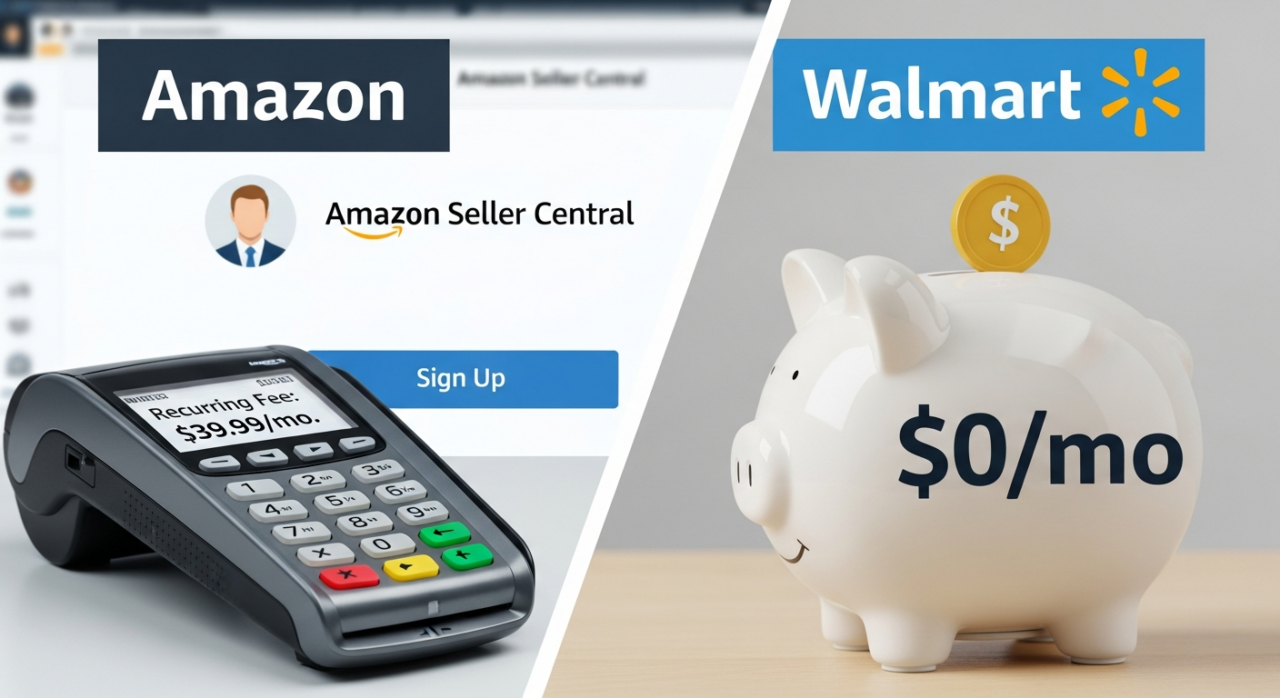
Amazon offers two plans. The Individual plan has no monthly fee but charges a flat $0.99 per item sold, making it suitable for those selling very few items. However, most serious sellers opt for the Professional plan, which comes with a fixed cost of $39.99 per month.
Walmart, on the other hand, actively courts sellers by eliminating this barrier to entry. There are no monthly subscription or setup fees to sell on Walmart Marketplace. For new sellers or those with tighter budgets, Walmart presents an immediate cost saving right from the start.
2. Calculating Your Commission: A Look at Referral Fees
For every sale you make, both platforms take a cut. This is known as a referral fee or commission, and it’s typically a percentage of the total sales price.
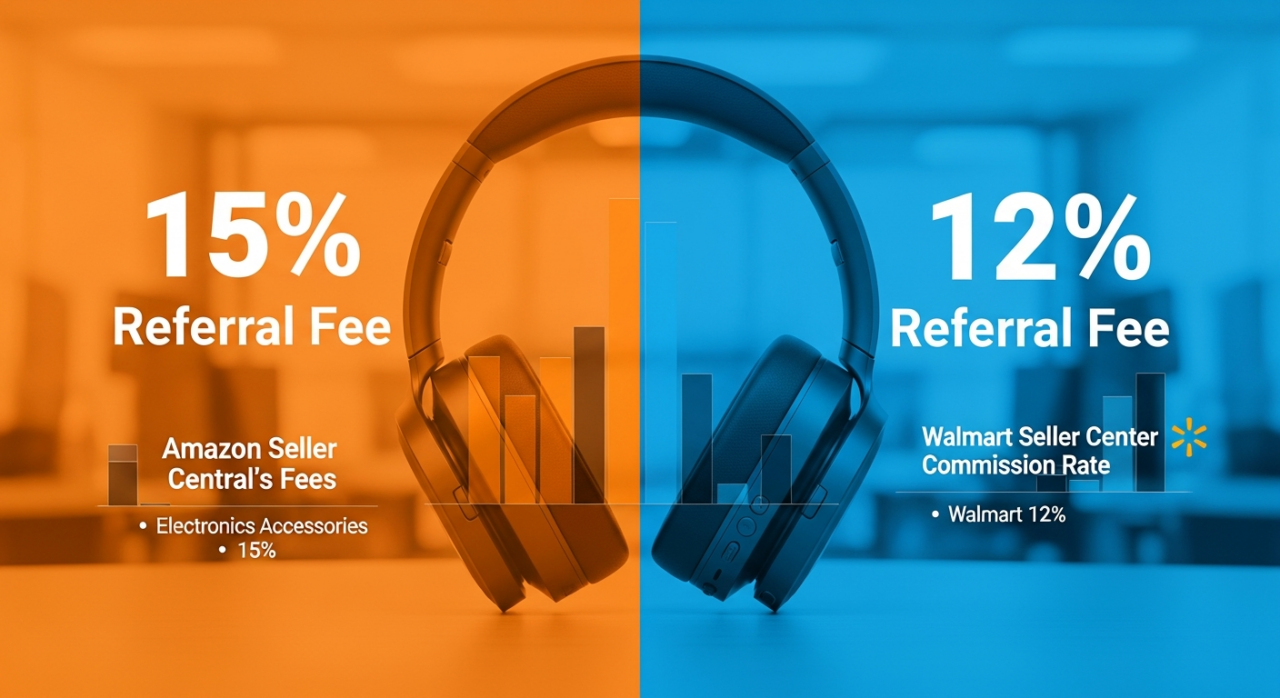
On Amazon, referral fees generally range from 8% to 15%. While 15% is a very common rate across many popular categories, some specialized categories, like Amazon Device Accessories, can have fees as high as 45%.
Walmart’s referral fees fall into a similar range, typically between 6% and 15%, depending on the product category. This means that in certain categories, Walmart offers a lower commission rate. Furthermore, Walmart has been known to offer promotional referral fee reductions as an incentive for new sellers, giving them a distinct advantage as they get started.
3. The Price of Convenience: Fulfillment Fees (FBA vs. WFS)
Both Amazon and Walmart offer their own fulfillment networks—Fulfillment by Amazon (FBA) and Walmart Fulfillment Services (WFS)—to store, pick, pack, and ship your products. The fee structures are complex and highly dependent on your product’s specific size and weight.
FBA fees for a standard-size item under 3 pounds can vary from approximately $3.06 to $6.62. WFS fees are based on shipping weight and start at $3.45 for an item under 1 pound.
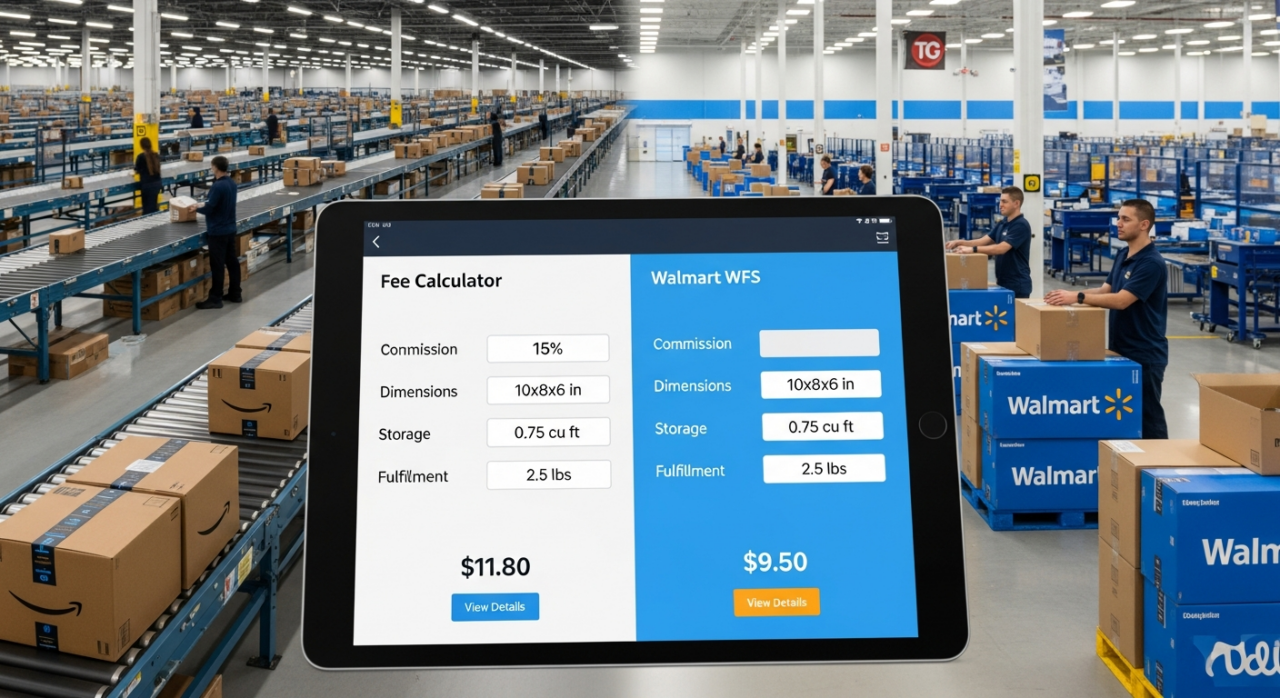
The claim that one is definitively cheaper than the other is context-dependent. For a very lightweight item, FBA might be slightly cheaper. For a slightly heavier item, WFS could win out. The only way to know for sure is to run the numbers for your specific products using each platform’s fee calculator.
4. Storing Your Success: A Tale of Two Storage Fee Models
If you use FBA or WFS, you will be charged for storing your inventory in their warehouses. While the base rates are comparable, the real difference emerges during the holiday shopping season.
Walmart’s standard monthly storage fee is $0.75 per cubic foot. Amazon’s off-peak (January-September) rate is slightly higher at around $0.78 per cubic foot.
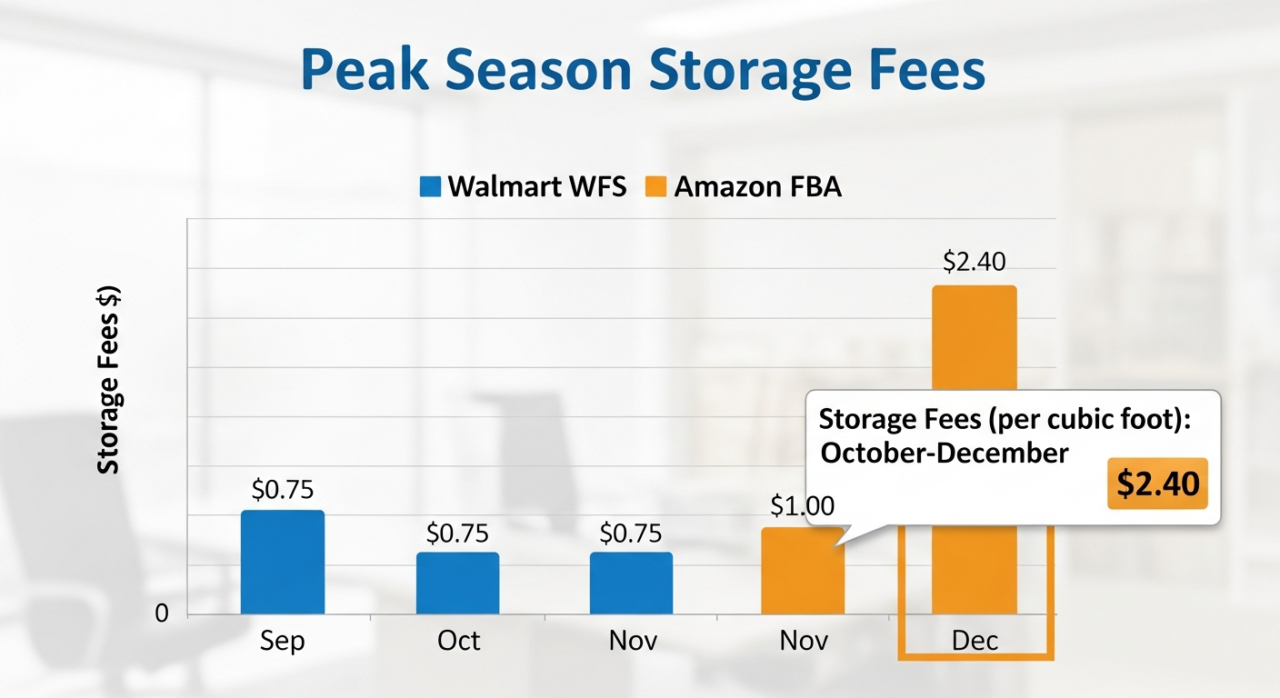
The critical difference is peak season pricing. From October to December, Amazon’s storage fee for standard-size items skyrockets to $2.40 per cubic foot, more than triple its normal rate. In contrast, Walmart has historically waived peak season storage surcharges for sellers using WFS. This can translate into massive savings for sellers during the most crucial sales quarter of the year.
5. Rewarding Performance: The Pro Seller Advantage
Walmart offers an incentive program that Amazon does not have a direct equivalent for. The Walmart Pro Seller program rewards high-performing sellers who meet specific criteria for excellent service and on-time delivery.

The benefits are significant. Pro Sellers get a special badge on their listings to build customer trust, can receive increased product visibility, and, most importantly, can earn referral fee discounts of 5% to 10% on qualified items. This program directly rewards sellers for good performance by lowering their costs.
6. Beyond the Basics: Understanding Additional Fees
Finally, it’s important to be aware of other potential fees on both platforms. While some may call these “hidden fees,” they are generally outlined in the seller agreements.
Both Amazon and Walmart charge for long-term storage of inventory that doesn’t sell quickly. Amazon’s aged inventory surcharges can begin after 181 days, while Walmart’s typically apply to items stored for over a year. Both platforms also have fees for having inventory removed or disposed of from their fulfillment centers. The key takeaway is that sellers on either marketplace must familiarize themselves with the full fee schedule to avoid unexpected costs and manage their inventory effectively.
Need Help Growing Your Sales?
We are here to help you scale.