
 (925) 293-3313
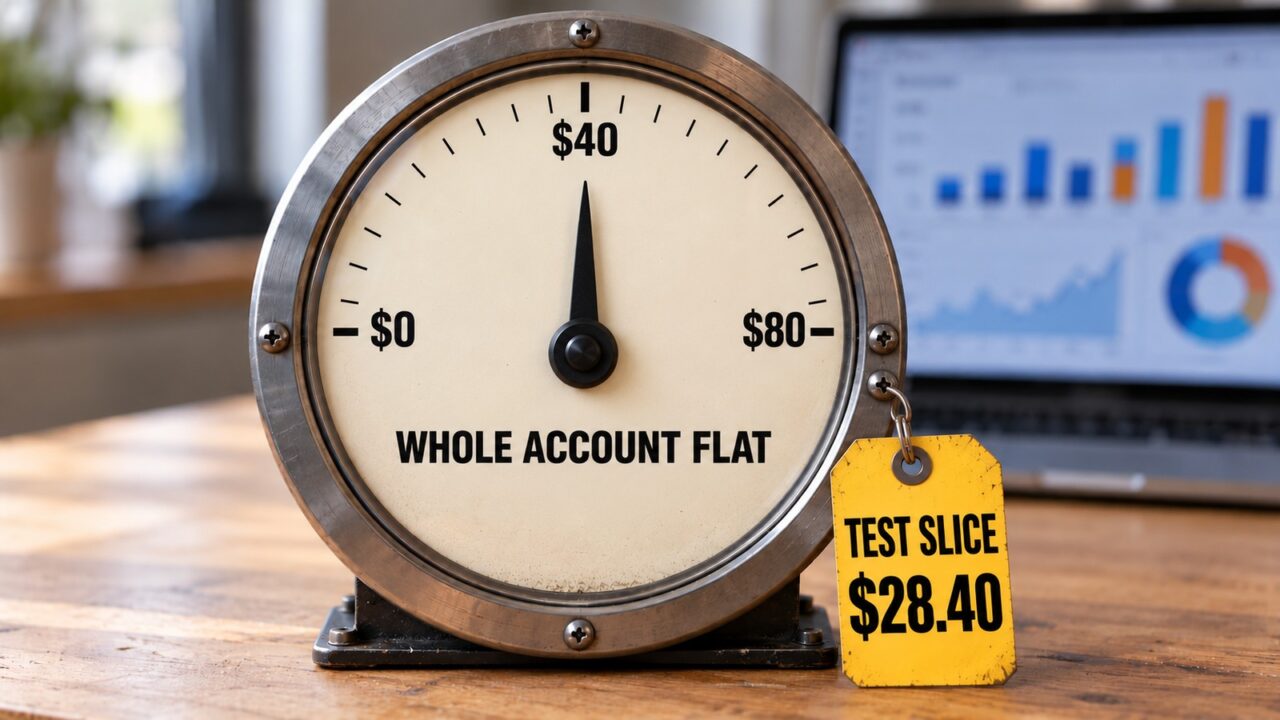
Amazon says advertisers in its Full-Funnel Campaigns beta won new-to-brand customers at a 29% lower cost. New-to-brand customers are shoppers placing their first order with a brand in a year.
The footnote to Amazon’s launch announcement says what that 29% was measured against: the combined average of other campaigns across the beta advertisers. A campaign that beats your other campaigns hasn’t proved your account got better, so the check here compares the whole account’s new customers and cost before and after.
Full-Funnel Campaigns is a campaign type Amazon opened as a US beta on September 29, 2026. You give it your products, a budget and an optional ROAS threshold, the lowest return on ad spend (sales per ad dollar) you’ll accept. Amazon’s AI then picks the formats, spreads the budget across what Amazon calls funnel stages and handles the audiences.
EHP hasn’t run Full-Funnel Campaigns, so this is the check we’ve written down before seeing any result.
A made-up month: cheaper in the slice, flat in the account
Say your monthly ad budget is $2,000, and your ad reports count 50 new-to-brand purchases a month. Amazon counts first-time orders, not people, but to keep the sums simple we’ll treat each purchase as one new customer, so each costs you $40. You put $600 into Full-Funnel Campaigns and call that money the test slice. The other $1,400 stays on your current campaigns.
If Amazon’s 29% lower cost held for you, a customer in the test slice would cost $28.40, and $600 would buy about 21. On paper, that’s six more than the 15 customers the same $600 buys at $40.
Now look at the whole account. Suppose it still reports 50 new customers for the month. The slice claims 21 of them, which leaves 29 for your existing campaigns, now spending $1,400 (about $48 each).
| Group | Budget | New-to-brand customers | Cost each |
|---|---|---|---|
| Whole account before the test | $2,000 | 50 | $40 |
| Test slice | $600 | about 21 | $28.40 |
| Rest of the account | $1,400 | 29 | about $48 |
| Whole account with the test | $2,000 | 50 | $40 |
The account spent $2,000 for 50 new customers, $40 each, before and after. Some of those 21 may have been shoppers already on their way to you. The new campaign reached them first and took the credit, and these numbers can’t tell you how many.
The month could have gone another way. At 58 new customers, the same $2,000 bought eight more, about $34 each, and that’s worth a second run. At 44, it lost six, about $45 each, and that’s a reason to stop and find out what changed.
What Amazon’s unBoxed 2026 beta numbers actually measure
Amazon announced Full-Funnel Campaigns at its unBoxed 2026 conference, and its unBoxed news page summed up the beta in two sentences.
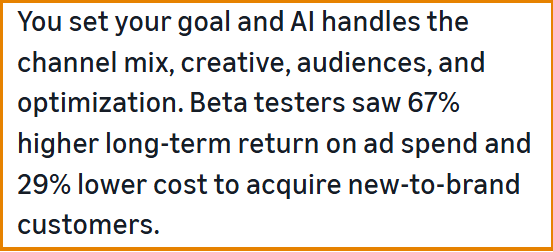
The announcement compares the 67% with “the same formats configured independently”, and its footnote compares the results with “the blended average of other campaign performance across beta advertisers”, using Amazon’s internal data from June to August 2026. Either way, it’s one campaign measured against other campaigns, and Amazon adds that individual results may vary. The research firm Futurum Group points out that the advertisers chose to join the beta and that there was no holdout, meaning a group kept away from the ads to compare against.
The 67% is a long-term ROAS, and Futurum says the campaign is scored against Long-Term Sales, an Amazon metric that adds today’s sales to the estimated value of new-to-brand customers over the next 12 months. Part of what’s being scored is a forecast, and a four-week test on your account can’t reproduce a forecast. Judge your test on sales you can already count.
Two details matter for the test. The announcement says the campaign runs alongside your existing campaigns, so you can give it a slice and leave the rest alone. And Digiday reported from the conference that advertisers approve creative but cannot select individual channels or specific audiences, so you’re testing the whole package.
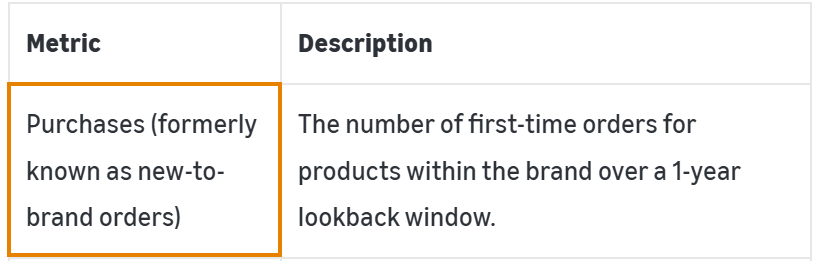
Amazon’s help page now calls the sponsored ads metric Purchases (formerly known as new-to-brand orders). It also says new-to-brand data is available for Sponsored Brands and display ads but not for Sponsored Products, the ads that promote individual product listings.
So if most of your spend is on Sponsored Products, your ad reports will miss some of the account’s new-to-brand purchases. Using the same report before and after keeps the comparison consistent, but it doesn’t fully fix the gap if your mix of ad types changes during the test. Note which report you used and how your spend splits across ad types, and treat the reported total as a partial count of the account’s new customers.
How to run a Full-Funnel Campaigns check
- Before launch, write down two whole-account numbers for the last full month: new-to-brand customers, and cost per new-to-brand customer (ad spend divided by that count). Already running it? Use the month before it started.
- Put about 30% of the monthly budget into Full-Funnel Campaigns on one product that sells steadily and enough to move the account total. That’s our judgement: 30% is enough to show a result, and a bad four weeks puts only the slice at risk, plus whatever that money would have earned in your other campaigns. Keep the rest on your current campaigns, such as the sponsored ads in our Amazon PPC strategy guide.
- Run it for four weeks. Note any price change, promotion or stock problem on the day it happens.
- At the end, pull the same two numbers for the whole account and for the slice, for the same dates, from the same report and under the same metric name. Take the whole-account figure from one account-level report rather than adding campaign reports together, so you don’t risk counting a purchase twice.
| Measure | Before the test | During the test | What it tells you |
|---|---|---|---|
| Whole-account new-to-brand customers | ____ | ____ | Did the account gain customers? |
| Whole-account cost per new-to-brand customer | ____ | ____ | Did acquiring customers get cheaper overall? |
| Test-slice cost per new-to-brand customer | n/a | ____ | Did the slice beat the starting cost? |
| Big changes (price, promotion, stock, other ads) | ____ | ____ | Is the comparison contaminated? |
Three ways the comparison can fool you
The one-year lookback can flatter you. Amazon counts a purchase as new-to-brand if the shopper hasn’t bought from your brand in the past 12 months, so a shopper who last bought 13 months ago counts as new again. A brand whose buyers come back once a year or less will see more new customers than it really won.
A sale can flatter you too. A 20% off promotion in the test month, with none in the month before, makes customers look cheaper with no help from the campaign. If something that big changed, run the test again.
And our own check isn’t a holdout either. A before-and-after comparison moves with the season, so a test month in the run-up to the holidays can look better for reasons that have nothing to do with the campaign. If you have it, compare with the same month last year too.
Frequently asked questions
Does a lower cost per new-to-brand customer mean Full-Funnel Campaigns worked?
Not on its own. Look at the whole-account rows of the result sheet. If they stayed flat, the slice’s lower cost may have come out of your other campaigns.
How long should I run the test?
None of the sources we read give a test length. We’d use four weeks, long enough for a month-on-month comparison and short enough to cap the risk.
Where do I find new-to-brand numbers in my account?
Amazon’s help page lists the metric as Purchases (formerly known as new-to-brand orders), and the same table also calls it Purchases (new-to-brand). We haven’t confirmed which label Full-Funnel Campaigns reports use, so check the name before you compare. Our own August 2025 walkthrough used the older name, New-to-Brand Orders.
Where we stand
We won’t recommend Full-Funnel Campaigns on the strength of 67% or 29%. Amazon produced both numbers by grading its own campaign against other campaigns, and the campaign is scored on Long-Term Sales, which Futurum Group notes is partly a forecast. What would change our mind is an account that gains new customers, or pays less for each one, as a whole while the slice runs.
Written October 24, 2026 and updated November 7, 2026. Sources: Amazon Ads, Grow total sales with Full-Funnel Campaigns (September 29, 2026, read November 7, 2026); Amazon Ads, unBoxed 2026 news and announcements (September 30, 2026, read October 24, 2026); Amazon Ads help, sponsored ads new-to-brand metrics (read October 24 and 27 and November 7, 2026); Futurum Group, Amazon Ads unBoxed 2026: Amazon Positions Its Ad Business Around Agents (October 27, 2026, read November 7, 2026); Digiday, At its flagship unBoxed conference, Amazon Ads collapses buying silos as AI takes a bigger role in media decisions (September 29, 2026, read October 27, 2026).
Written by the EHP Consulting Group team. If you want an outside read on your ad spend and account setup, book an Amazon account audit.