 (925) 293-3313
1. Understanding the Shift: The Old Way vs. The New Way
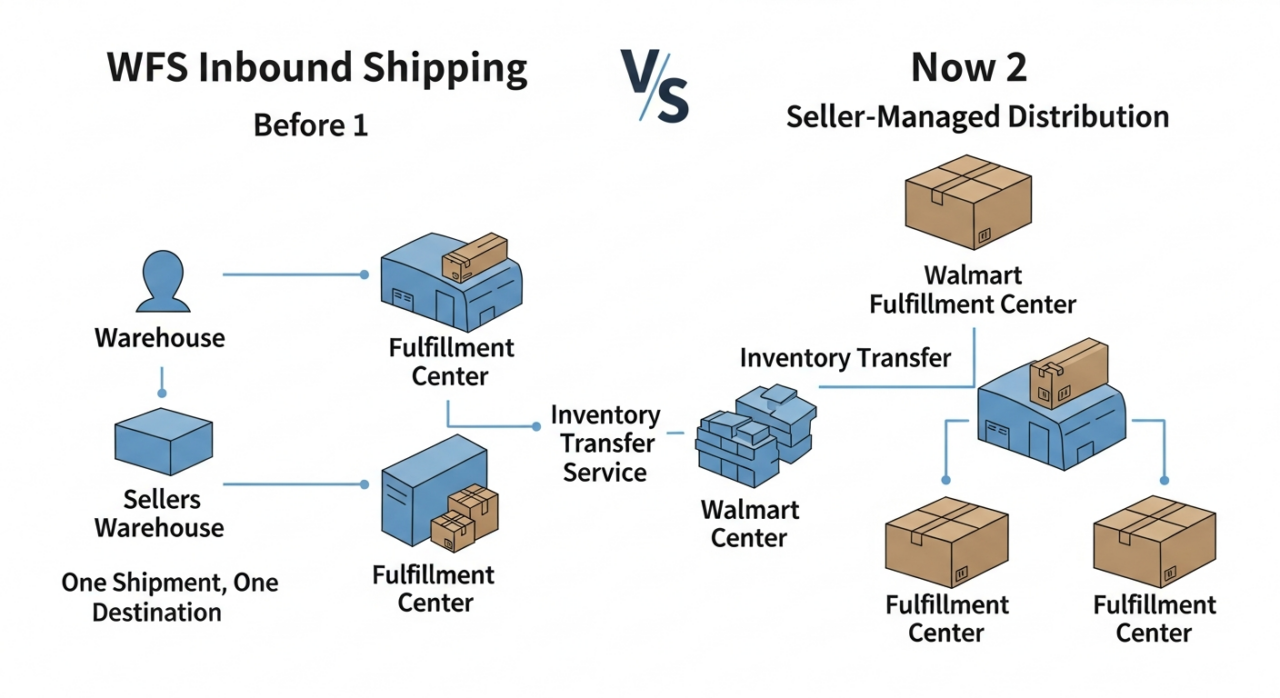
If you’re a Walmart Fulfillment Services (WFS) seller, you’re likely accustomed to a straightforward inbound shipping process. Previously, you would send your entire inventory shipment to a single, designated Walmart fulfillment center. From there, Walmart handled the complex task of distributing your products across its national network to position them closer to customers—all at no additional cost to you.
That system is now changing. Walmart is overhauling its inbound logistics, introducing a new model that gives sellers more control but also introduces new cost considerations. Now, you must choose between two distinct inbound shipping options, a structure that closely mirrors Amazon’s FBA inbound placement service.
2. Option A: Seller-Managed Distribution
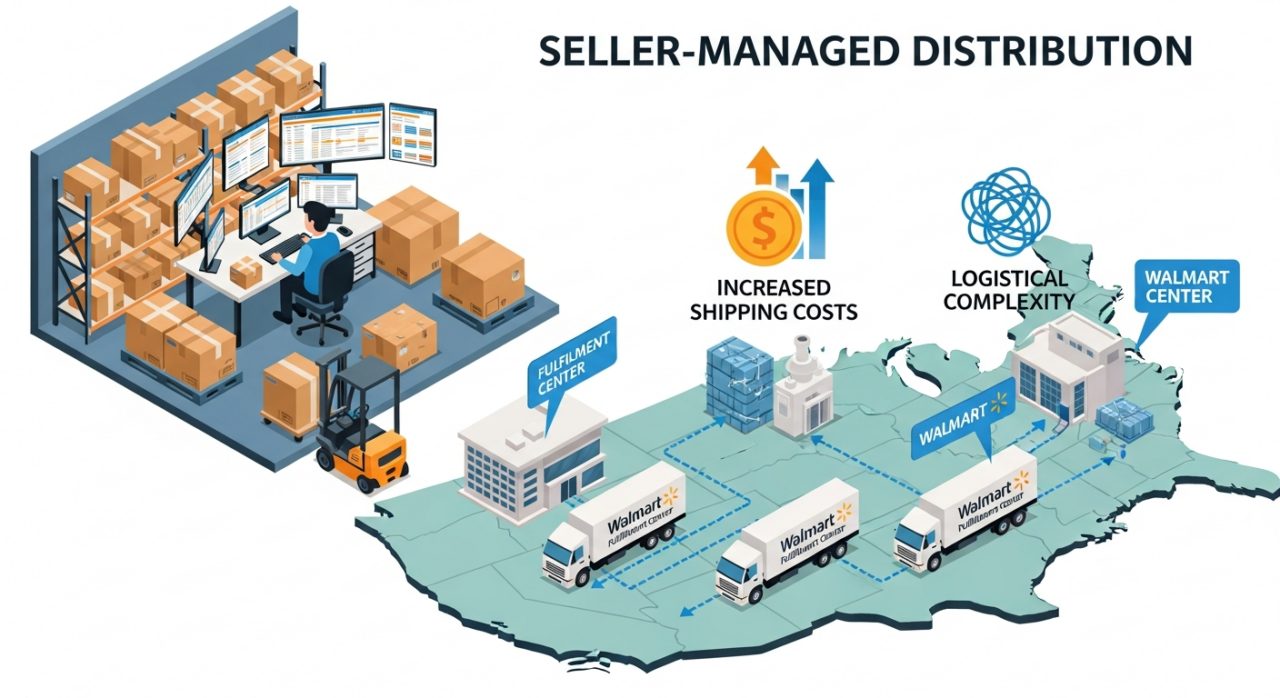
Your first choice is to manage the distribution of your inventory yourself. Under this model, when you create a shipping plan, Walmart will assign your inventory to multiple fulfillment centers across the country. You will be responsible for splitting your shipment and sending the designated quantities to each of these locations.
Pros of this option:
- Avoids New Fees: The primary benefit is that you will not have to pay Walmart’s new per-item Inventory Transfer Service fee.
- Potential for Faster Delivery: By placing your inventory in multiple regions from the start, your products are closer to a wider range of customers, which can reduce final-mile delivery times and improve the customer experience.
Cons of this option:
- Increased Shipping Costs: You will likely face higher carrier costs by shipping to several different locations instead of just one.
- Logistical Complexity: Managing and tracking multiple shipments to various destinations adds a layer of operational complexity to your inbound process.
3. Option B: The Inventory Transfer Service (ITS)
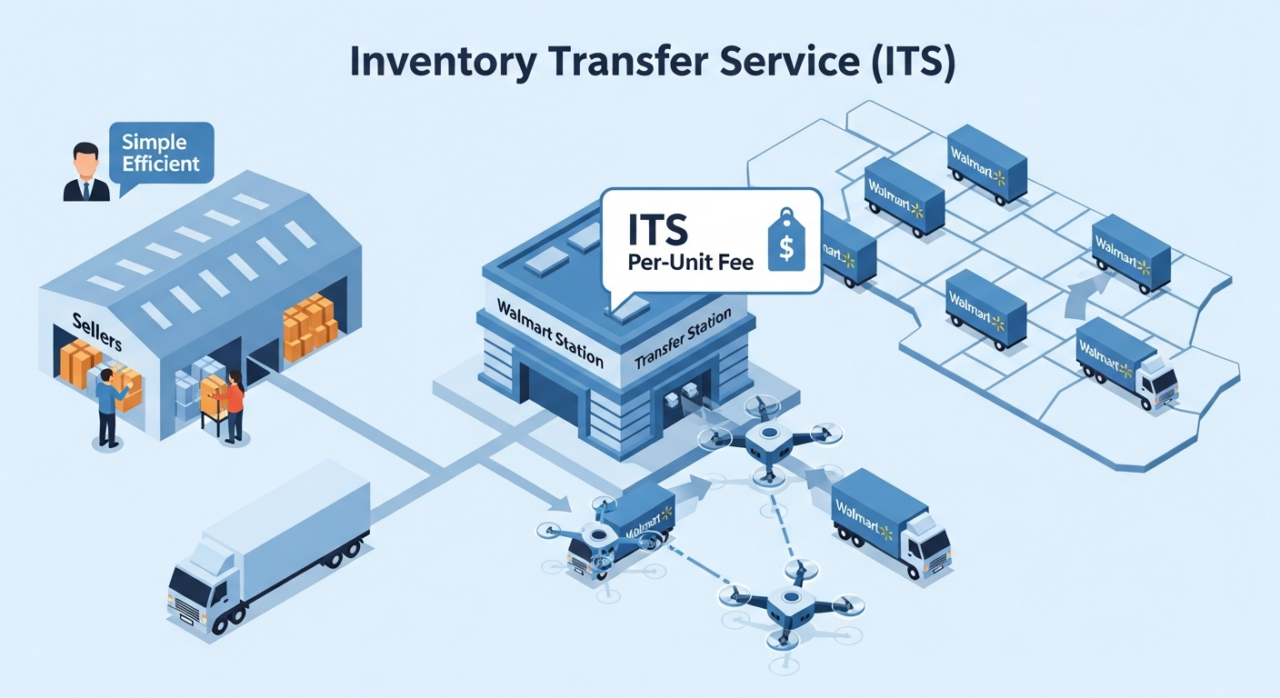
Your second choice is the new Inventory Transfer Service (ITS). This option is designed for convenience and most closely resembles the previous WFS system. With ITS, you send your entire inventory shipment to a single Walmart transfer station. Walmart then takes over, breaking down your shipment and distributing your products throughout its fulfillment network on your behalf.
Pros of this option:
- Simplicity and Efficiency: You only need to manage one shipment to one location, which streamlines your logistics and saves significant time and effort.
- Predictable Shipping Costs: Your own shipping costs are simplified, as you are only paying a carrier for a single shipment.
Cons of this option:
- New Per-Item Fees: This convenience comes at a cost. You will be charged a per-unit fee for every item processed through the ITS.
4. Deconstructing the New ITS Fee Structure
If you choose the Inventory Transfer Service, you need to factor a new expense into your profit calculations. The fee is charged per unit and is based on the item’s weight. The fee tiers are as follows:
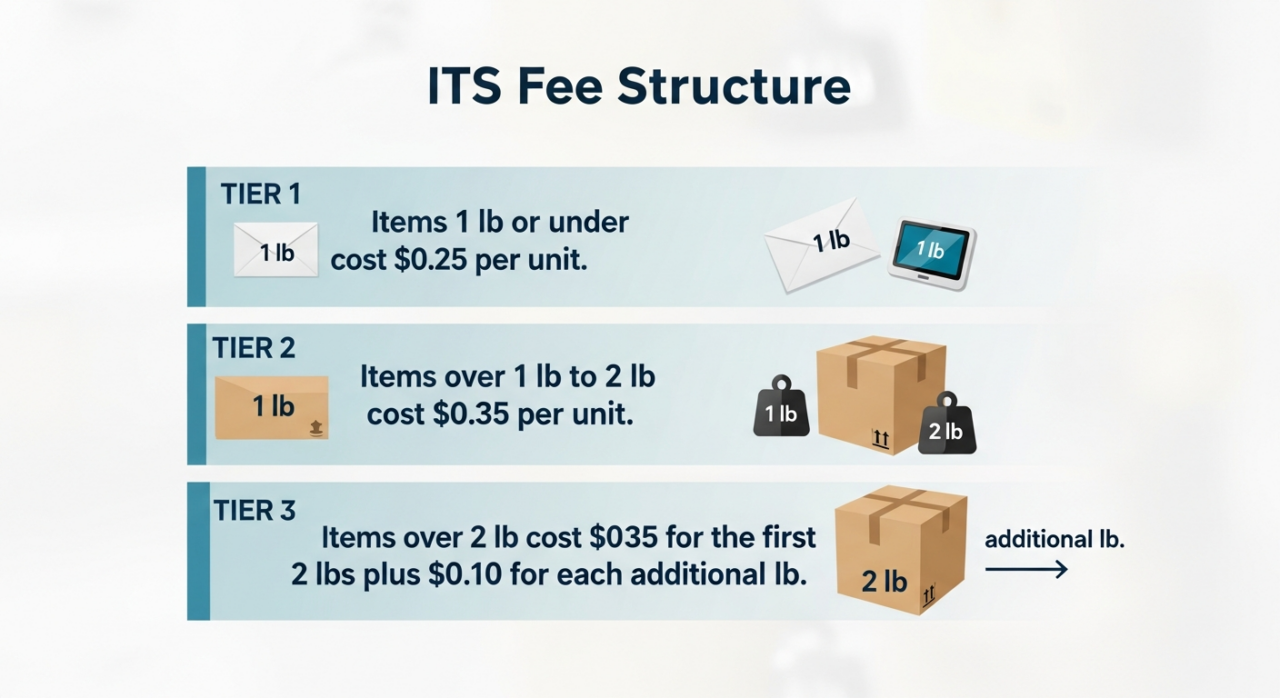
- Items 1 lb or under: $0.25 per unit
- Items over 1 lb to 2 lb: $0.35 per unit
- Items over 2 lb: $0.35 for the first 2 lbs + $0.10 for each additional pound
For sellers with small, lightweight items, this fee may be negligible. However, for those selling heavier or larger products, these costs can add up quickly and have a material impact on your margins.
5. How to Choose the Right Inbound Strategy
Deciding between seller-managed distribution and the Inventory Transfer Service requires a careful cost-benefit analysis specific to your business and product catalog. There is no one-size-fits-all answer. Here’s a strategic framework to help you make the right choice.
First, conduct a thorough cost analysis. Calculate the potential carrier costs for shipping your typical inventory volume to three or four different regions versus shipping it to one central location. Compare that added shipping expense to the total ITS fees you would incur for the same shipment.
Next, evaluate your products. Are they small and light? The low ITS fee might be worth the convenience. Are they large, heavy, or oversized? The ITS fees could become substantial, making seller-managed distribution the more financially sound option, even with higher initial shipping costs.
Finally, assess your operational capacity. Do you have the time, manpower, and systems to efficiently manage split shipments to multiple locations? If your operation is lean, the streamlined simplicity of the Inventory Transfer Service might be the most valuable option, allowing you to focus on other areas of your business.
Need Help Growing Your Sales?
We are here to help you scale.
YouTube Channel Link: EHP Consulting Group on YouTube
TikTok Profile Link: EHP Consulting Group on TikTok
Written By: Ahzel P. Miral
Email: info@ehpconsultinggroup.com
Website: http://www.ehpconsultinggroup.com
Number: 925-293-3313
Date Written: July 23, 2026